
HELPING EVERY CHILD THRIVE: MONTESSORI, INCLUSION AND THE SCHOOL OF THE FUTURE
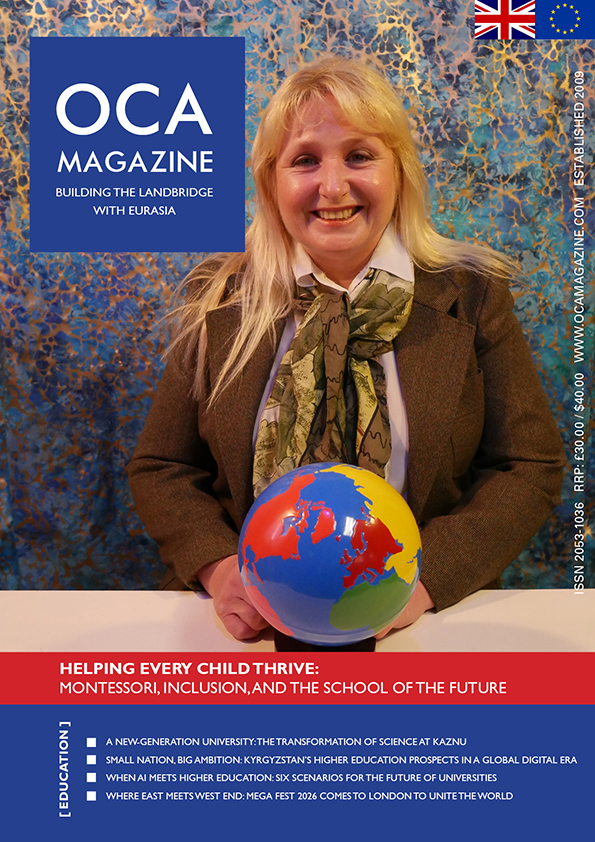
Teaching and medicine have been part of Lidia Belozerova-Solonovich’s family heritage for generations, inspiring a lifelong commitment to education and child development. Her professional journey began at the Rostov College of Arts, where she trained as a violinist and music educator, before continuing her studies at New York University and completing Montessori teacher training at the West Side Montessori School.
Her deep interest in how children learn led her to study Neuroscience and Psycholinguistics at St. Petersburg State University under Professor Tatyana Chernigovskaya, shaping her understanding of language acquisition, cognition, and the needs of diverse learners.
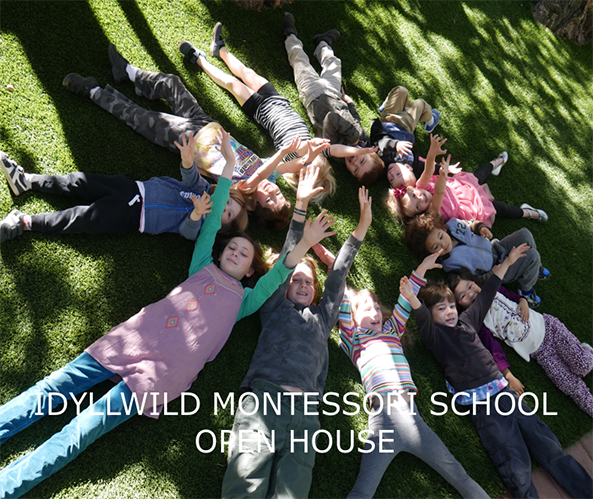
Today, she brings together expertise in music, Montessori education, neuroscience, and child psychology in her work at Idyllwild Montessori School. Passionate about nurturing each child’s unique potential, she believes that education is not only about academic success but also about building confidence, resilience, and a lifelong love of learning.
OCA Magazine: Why has inclusive education become such a priority globally? What changes have you seen in the United States?
Lidia Belozerova-Solonovich: Inclusive education has become a global priority because modern societies increasingly recognise that diversity is not an exception but the norm. Schools are expected not only to provide academic knowledge but also to prepare children to live and work in diverse communities. At its core, inclusion is about equal opportunity and human dignity.
In the US, there has been significant progress over the past decade. Awareness of neurodiversity and individualised learning needs has grown, and schools are increasingly moving away from deficit-based thinking towards identifying students’ strengths. We see broader adoption of differentiated instruction, Universal Design for Learning (UDL), and collaborative support systems involving teachers, specialists, and families. The conversation has shifted from whether children with diverse needs belong in mainstream settings to how schools can best support their success.
OCA: Montessori schools are traditionally associated with an individual approach to each child. How does the Montessori philosophy help create a truly inclusive educational environment for children with different needs and developmental backgrounds?
LBS: In many ways, inclusion is built into the Montessori philosophy. Maria Montessori believed that every child develops on their own timeline and has unique strengths. Montessori environments are designed to accommodate individual differences naturally, rather than expecting all students to learn the same thing at the same pace.
Mixed-age classrooms, self-paced learning, hands-on materials, and freedom within clear boundaries allow children to engage in ways that suit their developmental stage — benefiting all students, not only those with identified learning differences. Montessori classrooms encourage peer support, cooperation, and mutual respect, helping children see diversity as a natural part of everyday life.
OCA: In your view, what are the main mistakes educational systems in the post-Soviet space make when it comes to inclusion? What aspects of the American experience could be adopted?
LBS: One of the main challenges in many post-Soviet educational systems is that inclusion is sometimes treated as a formal policy rather than a genuine cultural transformation. Physical placement of children with diverse needs into mainstream classrooms matters, but true inclusion also requires changes in teaching practice, assessment, teacher training, and public attitudes.
Another challenge is the persistence of highly standardised education, where success is measured by uniform academic outcomes — making it difficult to accommodate different learning styles and developmental paths.
From the American experience, several practices stand out: stronger collaboration between educators, specialists, and families; individualised educational planning; investment in teacher training; and a strengths-based approach. Crucially, inclusion should be seen not as a special initiative for certain children but as a framework that improves education for everyone.
OCA: Today, there is increasing discussion about the importance not only of academic knowledge but also of emotional intelligence, empathy, and interpersonal skills. How does an inclusive environment influence the development of these qualities in children?
LBS: An inclusive environment gives children daily opportunities to interact with peers who think, communicate, and learn differently. These experiences build empathy, patience, and effective communication.
When children learn alongside peers with different abilities and backgrounds, they understand that everyone faces challenges and has something to contribute. Research and practice both show that inclusive settings build stronger social-emotional competencies — increasingly recognised as essential for success in modern society.
OCA: How prepared is modern society – including parents, teachers, and state institutions – for genuine inclusion? In your opinion, where is the main dividing line today between declarations of inclusivity and real change?
LBS: Awareness has grown significantly, but readiness varies widely. Most parents, educators, and policymakers support inclusion in principle. Translating that commitment into practice, however, requires resources, training, leadership, and sustained effort.
The main dividing line between declarations and real change is the gap between access and participation. It is relatively easy to say all children are welcome. It is far harder to create environments where every child can meaningfully participate and feel a genuine sense of belonging.
True inclusion requires investment in teacher preparation, specialist support, adaptive environments, and strong family partnerships — and above all, a cultural shift from viewing difference as a problem to embracing it as part of human diversity.
OCA: How do you envision the school of the future? What role will inclusion, personalised learning, and new technologies play in education over the next 10-15 years?
LBS: The school of the future will be more personalised, flexible, and learner-centred. Advances in technology — including AI and adaptive learning platforms — will make it easier to tailor instruction to individual strengths and needs.
But technology alone will not transform education. The most successful schools will combine innovation with strong human relationships. Teachers will increasingly act as mentors and guides rather than simply providers of information.
Inclusion will become a foundational principle, not a separate initiative. Personalised learning pathways will allow students with different abilities and aspirations to learn together while pursuing individual goals, with greater emphasis on creativity, critical thinking, emotional intelligence, and global citizenship.
Ultimately, the future of education is not about treating everyone the same. It is about creating systems that help every child thrive, contribute, and belong.