
THE SILK ROAD VIRTUAL MUSEUM
BRINGS GLOBAL HISTORY ONLINE
When we think of the Silk Road, we often picture camel caravans crossing deserts or traders carrying silks and spices along dusty mountain passes. Yet the Silk Road was never a single route. It was an extraordinary web of connections, stretching across continents and seas, linking civilisations from China to the Mediterranean.
The Silk Road Virtual Museum was launched in September 2024 by Professor Richard Griffiths, a retired long-time lecturer at Leiden University and pioneer of digital learning on Coursera. His vision was simple but ambitious: to create a digital museum that could open this rich history to the world, freely, beautifully, and without borders.
Unlike traditional museums limited by geography or building space, the Silk Road Virtual Museum is entirely accessible online. It brings together over 1,500 artefacts and stories from more than 200 collections across 50 countries, weaving them into immersive virtual exhibitions supported by extensive e-libraries. From Buddhist murals and Tang Dynasty porcelain to Viking silver and Persian manuscripts, the museum showcases the extraordinary cultural exchanges that shaped global history.
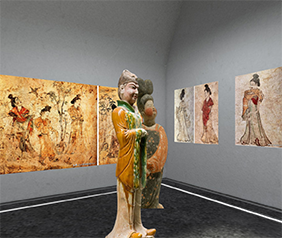
Too often, world history is told from a Western perspective, overlooking the roles of Asia, the Middle East, and Africa in shaping global trade and culture. By highlighting forgotten trade routes, religious encounters, and artistic traditions, the museum rebalances this view and shows a world that was always interconnected.
At the heart of the project is a commitment to accessibility. The museum is open to all, free of charge, ensuring that anyone with an internet connection can explore its galleries. The exhibitions make complex history understandable and relevant to a global audience, whether you are a scholar, a student, or simply curious about the past.
This September, the museum celebrates its first anniversary with 15 new exhibitions on the Maritime Silk Road—the sea routes that once connected Japan, China, Java, Calicut, Persia, and Venice.
For Professor Griffiths and his team, the mission is clear: to preserve cultural heritage, share it freely, and inspire curiosity about the ways our histories intertwine. As the museum grows, it invites us all to step inside and discover the stories that connect us across time and space.
Visit the museum at: silkroadvirtualmuseum.com.
by Richard Griffiths