
THE NUMBERS DON’T LIE: IS ASIA WINNING THE EDUCATION RACE?
Is this the Asian century in higher education? On the numbers alone, it may well be. More than half of the world’s university students are already in Asia, and that share is set to grow as ageing industrialised democracies give way demographically to younger populations in countries such as India, Indonesia, and across Central Asia.
But Asia’s ascendancy is not simply the result of demography. It is being actively shaped by national strategies designed to expand access, raise quality, and align universities more closely with economic transformation. Nowhere is this more evident than in Central Asia, where Kazakhstan and Uzbekistan are rapidly scaling their systems while working to ensure that growth translates into real gains in capability and opportunity.
The challenge is real. Expanding higher education at speed is difficult; doing so while improving quality and relevance is harder still. The experience of these countries suggests that while governments can create conditions for growth through new institutions, international partnerships, and research investment, what ultimately determines success is whether universities develop a clear sense of purpose — guiding what they teach, how they operate, and whom they serve.
The national strategies are driven by the rising aspirations of families across both countries. The goals are demanding: increase the supply of places, raise quality, and improve economic relevance — all at once. Both nations have adopted broadly similar paths: creating model universities, attracting international partners, reinforcing national research universities, and promoting quality across the system.
MODEL UNIVERSITIES
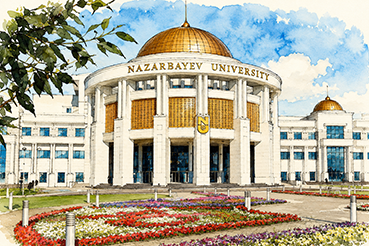
Kazakhstan’s and Uzbekistan’s governments have concentrated their resources in model universities, Nazarbayev University, where we are trustees, and the New University of Uzbekistan. These greenfield universities are exemplars to others in how to organize teaching and learning, how to combine teaching and research and how to lead and respond to changes in the economy. Nazarbayev University (NU) has emerged in the global rankings entering the top 500 in the 2026 Times Higher Education global rankings, a considerable achievement for a young university and it is the top of the research focused Leiden rankings for Central Asia with very strong Biomedical and Health Sciences. The New University of Uzbekistan established in 2021, ten years after NU with the task of ‘training highly qualified, globally competitive, and patriotic specialists’. While it has strong Presidential backing it is more modestly resourced than NU and its location in the heart of Tashkent is more constrained.
INTERNATIONAL PROVIDERS
Before establishing the New University, Uzbekistan moved to attract international providers, beginning with Westminster International University in Tashkent and Plekhanov Russian Economics University in 2002. Steady expansion followed, and by 2024 more than 30 international branch campuses were operating — driven by financial incentives including tax breaks and access to land, as well as a large pool of unmet student demand. Among these are Russian university campuses, valued for the opportunities open to Russian-language graduates in regional economies, as well as four campuses linked to the Ministry of Digital Technology — part of Uzbekistan’s ambition to become the regional hub for IT.
Kazakhstan’s efforts to recruit international branches are more recent but just as ambitious. Its goal is to have about 40 forty branch campuses operating by the end of 2029, all with a significant cadre of foreign faculty. The Minister for Science and Higher Education, Sayasat Nurbek hopes to leverage these branch campuses to make Kazakhstan a “recognised centre of knowledge creation, innovation and educational diplomacy” Kazakhstan’s internationalization efforts align with its efforts to diversify the nation’s economic base by prioritizing partnerships which have a basis in science and information technology.
RESEARCH INTENSIVE
NATIONAL UNIVERSITIES
Both countries have strengthened their leading public universities by pushing them to focus on research productivity. Kazakhstan’s approach has evolved from designating six national universities in 2001 to now inviting twenty into a Centres of Academic Excellence programme covering teaching, research, community engagement, and governance. Uzbekistan takes a more targeted approach through its “U-10” strategy, concentrating resources on ten leading research clusters and connecting them with international partners and local enterprises. Priority areas include renewable energy, water management, and the digital sector — building towards an R&D and commercialisation ecosystem to underpin an innovative economy.
LIFTING THE QUALITY
OF ALL UNIVERSITIES
These ambitious strategies are driven by profound demographic and economic change. New institutions will have opportunities to innovate and respond to rapid technological shifts, including the rise of AI. Growing participation will encourage new approaches to teaching and the creation of programmes in emerging fields. Demand will likely outstrip public resources, leading to further private provision — though structural change and private growth alone cannot guarantee quality.
Over two decades of studying higher education, we have consistently found that the most successful institutions define clear purposes — identifying the specific contributions they seek to make. Rather than focusing solely on rankings or research outputs, they reward efforts that address community challenges and improve student success, particularly for first-generation learners.
The experience of Central Asia highlights both the promise and the risks of rapid expansion. Growth and ambition can increase access and stimulate innovation, but they do not automatically ensure quality or impact. What distinguishes the best institutions is a clear sense of purpose, aligned across their teaching, research, and community engagement.
As higher education systems confront demographic change, technological disruption, and rising expectations, the lesson is clear: expansion must be matched by intention. Growth without purpose risks creating larger systems that deliver less. For universities in Central Asia, the path to excellence begins with a clear mission and the commitment to fulfil it.
by Alan Ruby and Mathew Hartley,
members of the Alliance for Higher Education and Democracy
at the University of Pennsylvania,
Trustees at Nazarbayev University
authors of ‘Pursuing Institutional Purpose: Profiles of Excellence’