
A unique educational project came to fruition in 2012 through collaboration between a UK school and sport governing bodies.
Sports participation improves physical and mental health and develops social and teamwork skills. But can sport act as a catalyst for educational advancement in a different way — one that does not require direct involvement as an athlete?
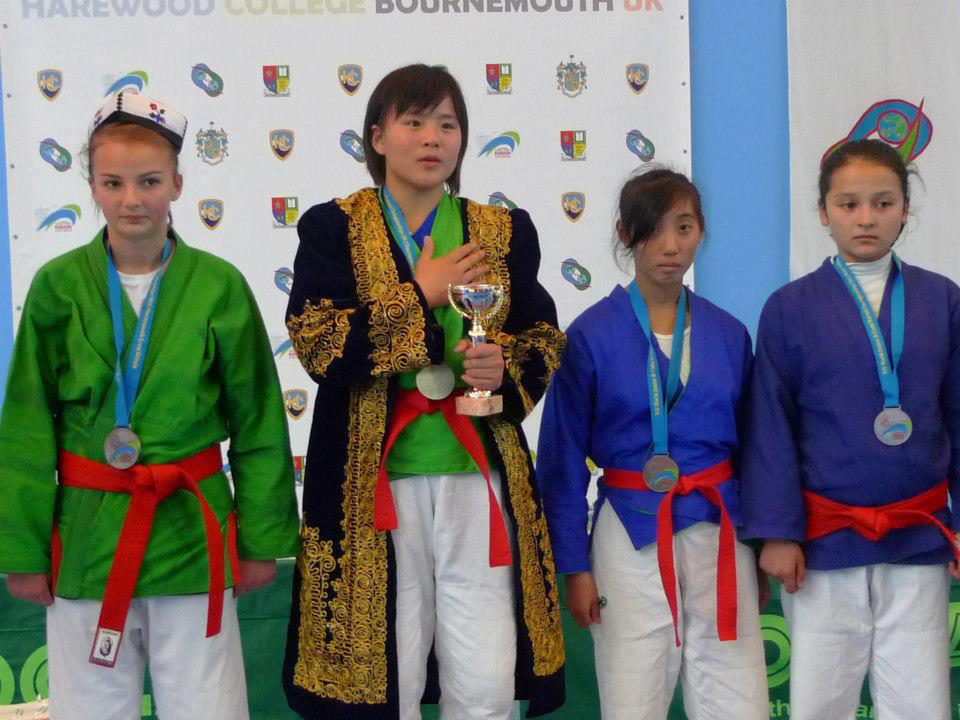
Yes it can. In 2012 Harewood College, a Bournemouth boys’ secondary school, assisted by Avonbourne College for Girls, collaborated with the British Kurash Association to host the World Junior and Cadet Kurash Championships.
Kurash, an ancient Uzbek wrestling sport, made its international debut in 1998 following Uzbekistan’s independence. By 2012 the International Kurash Association had around 100 member countries, including the UK. The British Kurash Association, formed in 1999, had been participating in international tournaments and organising UK events ever since.
The Department of Education granted Harewood Sports College status in 2006, and in 2011 Sport England funding enabled completion of the Roy Moore Sports Hall — 1,200m² of floor space, sufficient for major competitions. Global adult Kurash events fill stadiums, but junior internationals are more modest in scale. Hosting a junior world championship seemed a realistic ambition.
With 1,800 students and 150 staff skilled in IT, performing arts, and languages, the foundations were in place. Students could design the logo, mascot, and medals, take part in the opening ceremony, and volunteer as language interpreters — both schools had students fluent in major world languages as well as less common ones such as Thai and Urdu. A Kurash championship would also give students a chance to discover Uzbekistan’s culture and history.
With the school partnership in place, BKA officials met IKA President Komil Yusupov — a former Uzbekistan Youth Minister — in London in April 2011 to discuss the World Championships idea. Mr Yusupov was enthusiastic about the educational opportunities offered by the first global Kurash championship in Western Europe.
The venue was decided at the IKA Congress in Tashkent in November. Bids from Brazil, Poland, Mongolia, and Chinese Taipei were also considered, but the presentation emphasising wide-ranging educational benefits clinched the selection.
Preparation began in partnership with the Mayor, Bournemouth Borough Council, Bournemouth Tourism, and the Uzbekistan Embassy in London. Students submitted logo and mascot designs, helped with pre-event tasks, applied for day-of roles, and rehearsed diligently for the opening ceremony.
During assemblies, the schools’ “Olympic Values” of Respect, Excellence, Friendship, Courage, Determination, Inspiration and Equality were intertwined with Kurash and Uzbek culture.
In July, Ambassador Otabek Akbarov and Cultural Secretary Fahriddin Nabiev from the Uzbekistan Embassy visited to see the sports hall in use, hosting the Dorset School Games Table Tennis Finals — entirely officiated by Harewood students. “Where are the adults?” asked Mr Akbarov, impressed by the young volunteers’ professionalism. “There he is,” came the reply, pointing to the sole adult official. They left confident that the students would make excellent World Championships gamesmakers.
An IKA inspection team led by Komil Yusupov, including General Secretary Umid Yakubov and former Uzbek Ambassador to China Ismatulla Irgashev, were equally delighted to see students taking active roles and engaging with Uzbek culture.
The IKA delegation were treated to a performance of the schools’ production of Ben Elton’s “We Will Rock You”, leaving them in no doubt about the quality of opening ceremony they could expect.
Three club members qualified for the British team: fifteen-year-olds Jacob Grant and Oliver Jones, and seventeen-year-old Daniel Grant, a recent Harewood graduate — enthusiastic support for the tournament guaranteed.
Sponsors and more than 100 school volunteers were in place, along with student interns from the Anglo European Chiropractic College providing physiotherapy. Twenty-five nations from every continent entered, including France, Greece, Ukraine, South Africa, New Zealand, Mongolia, South Korea, Chinese Taipei, and a strong Uzbek team.
As a curtain-raiser, the Uzbekistan Embassy and IKA organised a Cultural Evening at Harewood. Highlights included an art masterclass by Distinguished Artist of Uzbekistan Ortikali Kozokov, a cookery class by an Uzbek chef, a language lesson from an Embassy official, a folk band, a photography exhibition, and Kurash demonstrations by World Championships contestants. Traditional food including plov was flown from Tashkent, cooked at a London Uzbek restaurant that afternoon, and transported to Bournemouth for the evening.
The championships were a resounding success. Uzbekistan dominated, but the British team performed admirably, winning 13 medals including gold for Victoria Cleevely from St Albans and bronzes for the Grant brothers.
Student volunteers were magnificent. Volunteer Manager Amanda Kelly said: “Like the Olympics, students and staff were our gamesmakers. Having students fluent in a diverse range of languages meant all teams were assigned interpreters. We introduced the language and culture of Uzbekistan to the curriculum through assemblies and lessons. The World Championships provided a unique and inspirational setting for students to gain new skills, experience, and confidence.”
Harewood College successfully hosted a world-class tournament described as “organised at the Olympic level” by Uzbekistan Today, and received the UK Youth Sports Trust Innovation in Sport 2012 commendation. The BKA was awarded the IKA’s Best Championship 2012.
by Paul Sawyer,
Harewood College, Bournemouth,
former international competitor in Judo,
Sambo and the Uzbek national wrestling sport of Kurash