
MOUNTAIN CROSSROADS: WHY CENTRAL ASIA’S PEAKS DEMAND A NEW VISION
Mountains are not passive backdrops to human history; they are dynamic, living systems that have shaped civilizations, economies, and ecosystems for millennia. Nowhere is this more evident than in Central Asia, home to some of the world’s most formidable ranges—the Pamirs, Tian Shan, Hindu Kush, Altai, and Ural. These mountains are more than geological formations; they are socio-ecological systems that sustain life far beyond their slopes. In an era of climate volatility, resource scarcity, and geopolitical flux, the question is no longer whether mountains matter, but how their stewardship will define the region’s future.
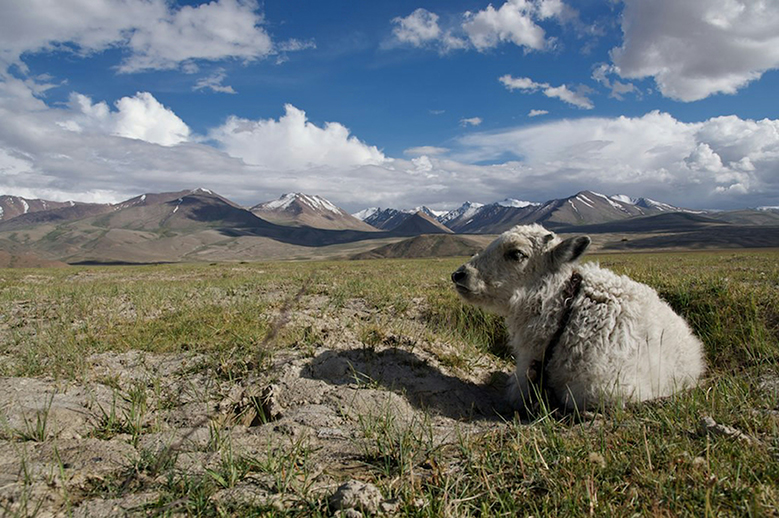
MOUNTAINS AS SOCIAL-ECOLOGICAL SYSTEMS
Modern scholarship rejects the outdated dichotomy of “wilderness versus society.” Instead, mountains are understood as integrated social-ecological systems where geology, ecology, and culture co-evolve. This perspective, rooted in the work of Alexander von Humboldt and Carl Troll, underscores the agency of local communities as stewards and rights-holders rather than passive beneficiaries. In Central Asia, these systems are particularly complex: rivers originating in high-altitude glaciers—such as the Amu Darya and Syr Darya—sustain agriculture, energy production, and livelihoods across multiple nations, making mountains central to regional geopolitics.
WHY MOUNTAINS MATTER
Mountains occupy roughly 25% of the Earth’s land surface and directly support over one billion people. Their influence, however, extends to at least half of humanity through the provision of freshwater, biodiversity, and ecosystem services. The Tibetan Plateau alone feeds six major rivers that sustain nearly 40% of the global population. For Central Asia, mountains are indispensable across several dimensions:
Water Security: Mountains supply 60–80% of global freshwater, underpinning agriculture, hydropower, and urban consumption.
Biodiversity Hotspots: Central Asian highlands harbor endemic species critical for global agrobiodiversity.
Cultural Heritage: Indigenous governance systems and traditional knowledge offer adaptive strategies for resilience.
Ethnolinguistic Diversity: Mountain communities preserve languages and cultural practices increasingly threatened elsewhere.
Economic Niches: High-value products—such as medicinal herbs and artisanal crafts—can drive sustainable livelihoods if integrated into fair trade networks.
Tourism and Recreation: Eco- and culture-based tourism is emerging as a key economic driver, though it requires careful regulation to avoid ecological degradation.
Renewable Energy: Hydropower and solar installations in mountain regions are central to regional energy strategies.
Climate Indicators: Glaciers and permafrost serve as early-warning systems for global climate change.
Disaster Mitigation: Healthy mountain ecosystems buffer against landslides, avalanches, and floods.
GLOBAL FRAMEWORKS
AND REGIONAL REALITIES
The international recognition of mountains as critical ecosystems is relatively recent. Initiatives such as the Mountain Agenda (1990), Agenda 21 (1992), and International Mountain Day have elevated mountain concerns in global policy. Instruments like the Convention on Biological Diversity, the Paris Agreement, and the Kunming-Montreal Global Biodiversity Framework now incorporate mountain-specific targets. Yet, these frameworks often falter in implementation, particularly in regions where governance is fragmented and local voices are marginalized. Sustainable development in mountains demands more than technical fixes—it requires justice, equity, and empowerment.
BIOCULTURAL DIVERSITY: A STRATEGIC ASSET
Central Asia’s mountains exemplify biocultural diversity—the interdependence of biological and cultural systems. Indigenous land-use practices, from rotational grazing to terrace farming, have sustained agrobiodiversity for centuries. Territories of life, or ICCAs (Indigenous and Community Conserved Areas), often outperform state-managed protected areas in conservation outcomes. Recognizing and strengthening these governance models is essential for achieving both biodiversity and development goals.
DOUBLE-EDGED FORCES: GLOBALIZATION
AND CLIMATE CHANGE
Globalization introduces both opportunities and vulnerabilities. While market integration can create economic prospects for mountain products and tourism, it also accelerates cultural homogenization and resource extraction. Climate change compounds these pressures: Central Asia’s mountains are warming at nearly twice the global average, triggering glacier retreat, erratic water flows, and heightened disaster risks. These dynamics disproportionately affect marginalized communities with limited adaptive capacity.
EMPOWERING LOCAL AGENCY
Contrary to deficit-based narratives that frame mountain communities as victims, evidence suggests they are pivotal actors in climate adaptation and biodiversity conservation. Traditional governance systems, coupled with adaptive knowledge, enable sustainable grassland management and carbon sequestration. Policy paradigms must therefore shift from top-down, extractive models to asset-based approaches that leverage local capacities and rights.
NEW PARADIGMS
IN SUSTAINABLE DEVELOPMENT
The Brundtland Commission’s definition of sustainable development—meeting present needs without compromising the needs of future generations—remains foundational. However, in the context of Central Asia’s mountains, sustainability must transcend the triad of economy, society, and environment to include culture, equity, and agency. The critical question is not only what future we want, but who decides that future. Inclusive governance that amplifies Indigenous and local voices is non-negotiable for legitimacy and effectiveness.
TOWARDS A COMMUNITY-CENTRED
MOUNTAIN AGENDA
Central Asia’s mountains are at a crossroads. The convergence of climate stress, economic globalisation, and political uncertainty demands a recalibration of development strategies. Sustainable futures hinge on three imperatives: recognising mountains as integrated socio-ecological systems, embedding justice and equity in policy frameworks, and empowering local communities as co-architects of change. If these principles guide action, Central Asia’s mountains can evolve from vulnerable frontiers to exemplars of resilience and sustainability.
by J Marc Foggin