
SEEDS OF CHANG: KAZAKHSTAN’S BET
ON SMART FARMING
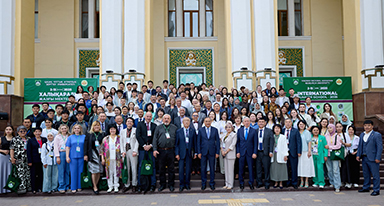
Over the past decade, Kazakhstan has accelerated the modernisation of its agricultural sector and higher education system in response to climate change, water scarcity, and rapid technological change. Its agro-education system is emerging as one of Central Asia’s leading AgriTech and innovation drivers. By integrating artificial intelligence, digital agriculture, smart irrigation, and international scientific cooperation, Kazakhstan is positioning itself as a regional hub for sustainable agricultural transformation and climate-resilient farming.
TRANSFORMATION
OF AGRICULTURAL EDUCATION
Agriculture in Central Asia is entering a new phase. Climate change, population growth, land degradation, and pressure on water resources are forcing governments and universities to rethink traditional agricultural models. In Kazakhstan, where agriculture remains a strategic sector, modernisation increasingly depends on integrating science, innovation, and digital technology into rural development.
Kazakhstan’s agro-education system is becoming one of the key tools driving this transition. Many agro universities are rethinking their roles and transforming themselves into regional AgriTech hubs connecting science, technology, education, and business.
This reflects a global trend in which universities evolve from teaching institutions into innovation ecosystems. In Central Asia, the shift is especially significant because agriculture underpins food security, employment, water management, and regional stability.
Kazakhstan possesses enormous agricultural potential — more than 200 million hectares of agricultural land — but faces serious structural challenges. Agriculture consumes 60–70% of Central Asia’s freshwater resources, while inefficient irrigation systems generate substantial losses. In some areas, those losses reach 40% due to ageing canals and outdated management.
These challenges have strengthened Kazakhstan’s focus on smart agriculture, water-saving technologies, digital monitoring systems, and climate adaptation strategies. All major agro-universities actively integrate artificial intelligence, GIS technologies, drones, AI, and IoT-based solutions into educational and research programs aimed at preparing specialists for the agriculture of the future.
SCIENCE, SMART IRRIGATION,
AND EXTENSION SERVICES
One of the strongest examples of Kazakhstan’s growing regional leadership is its work in water management and climate-resilient agriculture. Water scarcity is becoming one of the most critical challenges for Central Asia. Regional forecasts indicate that shrinking glaciers and rising temperatures may significantly affect the Syr Darya and Ili river basins in the coming decades.
Efficient irrigation is no longer solely an agricultural concern — it has become a matter of national economic security. Only around 20–25% of farms currently use precision agriculture tools such as GPS, GIS, and remote sensing, and Kazakh scientists are increasingly focused on applied solutions that improve water efficiency and help farmers adapt to climate change.
Universities actively promote precision agriculture and digital irrigation. Pilot projects using smart irrigation systems, GIS monitoring, and sensor technologies help producers optimise water use and raise productivity, with research teams working directly with farming communities to demonstrate practical results.
An important area is the Extension 4.0 model, partly inspired by cooperation with American and European universities. Extension centres — including one developed jointly with the University of Nebraska-Lincoln — increasingly serve as bridges between academic science and rural communities, ensuring that practical innovations reach farmers directly.
Pilot initiatives have already delivered measurable results: demonstration projects using satellite monitoring and modern irrigation systems have achieved water-use efficiency improvements of 20–30% compared to traditional methods.
Pasture management is another priority. Kazakhstan has some of the world’s largest pasturelands, yet many face degradation due to poor management and climate stress. Geospatial technologies and digital platforms are increasingly being used to monitor pasture conditions and optimise grazing, while AI-driven analytics help forecast water demand, assess soil conditions, and improve planting strategies.
Overall, Kazakhstan’s activities are increasingly attracting international partnerships. Cooperation with FAO, ADB, UN agencies, ERASMUS program, and European universities strengthens research capacity and supports the university’s ambition to become a regional platform for agricultural innovation and knowledge exchange.
FORMATION OF A REGIONAL AGRITECH HUB
FOR CENTRAL ASIA
Kazakhstan’s agro-education system ambitions increasingly extend beyond Kazakhstan. The university is positioning itself as a regional center for agricultural innovation, sustainable education, and scientific diplomacy in Central Asia, Afghanistan, and the Caucasus.
This reflects a clear recognition that water management, climate adaptation, food security, and sustainable land use are inherently transboundary issues requiring regional solutions.
Work is under way to establish a Regional Centre for Green Agriculture (RCGA) in collaboration with ADB, Wageningen University, and CAREC, creating a network for AI-driven research and education across the region.
A strategic priority is preparing graduates for the green and digital economy. Modern agriculture requires specialists who can combine agronomy with engineering, climate science, and data analysis, and Kazakhstan’s agro-universities are increasingly building exactly these interdisciplinary competencies.
The future of agriculture in Central Asia will depend on knowledge, innovation, and technological adaptation. What Kazakhstan’s experience demonstrates is that universities can be active drivers of economic modernisation and sustainable development — not just training grounds, but genuine engines of regional transformation.
In this context, Kazakhstan’s agro-universities are emerging as one of the region’s leading AgriTech and innovation hubs. Through smart irrigation, artificial intelligence, digital agriculture, extension services, and international cooperation, they demonstrate how universities can become active drivers of economic modernization and sustainable development.
The university’s transformation reflects a broader shift in higher education. Universities are increasingly becoming innovation ecosystems connecting science, business, government, and local communities.
For Kazakhstan, strengthening institutions such as KazNARU is strategically important not only for agricultural development but also for strengthening regional leadership in sustainability and technological innovation. As environmental and economic challenges intensify in Central Asia, universities capable of generating practical solutions and promoting regional cooperation will play an increasingly important role.
Kazakhstan’s experience demonstrates that the future of agricultural education lies at the intersection of science, technology, sustainability, and international collaboration. In this emerging landscape, the university is positioning itself not simply as a national institution, but as a regional platform shaping the future of smart agriculture across Central Asia.
by Akhylbek Kajigulovich Kurishbayev
Chairman of the Board – Rector
President of the National Academy of Sciences
of the Republic of Kazakhstan
Doctor of Agricultural Sciences, Professor, Academician
of the National Academy of Sciences
of the Republic of Kazakhstan