
During a recent visit to a book fair, some unusual covers caught my eye — familiar authors, but unfamiliar editions. They turned out to be reprints of landmark Qazaq scientific texts written in «tote jazu» (the «new spelling» devised by A. Baitursynuly based on Arabic script) in the early twentieth century. Baitursynuly understood that the progress of society, science, and culture rests on the written word. His contribution had a profound impact not only on Qazaq education and culture, but on the broader history of enlightenment among Turkic-speaking peoples.
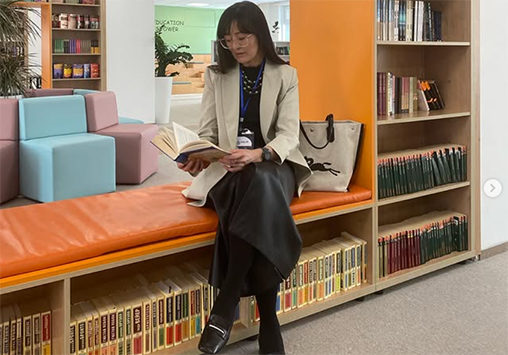
Among them is «Be Literate» (1926) by M. Zhumabayev, published exactly one hundred years ago. The book served a vital educational purpose in its time, and its ideas of teaching and mentorship remain compelling today. Preserved in the manuscript collection, it stands as a testament to one educator’s devotion to eliminating illiteracy and raising the cultural standing of the Qazaq people. Such efforts belong to what we now call human capital — an intangible but critical driver of economic growth.
With this in mind I’d like to dwell upon existing the attitude towards the basic concept like educational assessment: the challenges around the participation in large-scale international assessments (ILSA hereinafter). Worldwide education system is valued at macro level through regular monitoring of educational achievements of students. In this sense the main aim of ILSA is to develop an empirically based foundation of knowledge for improvement of educational policy and practice. For instance, PISA is the world’s most important test in changing education globally; I believe that participating in ILSA offers value, if the results are enforced to reform the curriculum and to develop teacher training programs. Besides, its results are included as constituent part of Global Innovation Index and IMD World Talent Ranking. Among plethora of potential benefits are the capacity building in item development, fair assessment practices and educational accountability and policymaking. As a result, an annual national assessment of the quality of secondary education in Kazakhstan Monitoring of Educational Achievements of Students (aka MODO) received international accreditation of RCEC (Research Centre for Examination and Certification) and was recently awarded a quality mark.
Analysis of ILSA results (PIRLS, PISA, ICILS, TIMSS) points to moderate achievements in primary and secondary education quality: digital literacy remains insufficient among most students; significant difficulties persist in mathematics and reading; educational quality is uneven; and regional disparities in school infrastructure are pronounced. This underlines the need for targeted regional support, stronger teacher training, modernised infrastructure, and expanded digital and functional literacy programmes.
As team lead for the national report on the state of the education system and as a researcher in this field, I have explored the localisation quality of test materials, teachers’ experiences and preparedness, and L1 teachers’ familiarity with the rigorous methodology and reading literacy instruments of PISA and PIRLS.
ILSA continues to attract global attention as a source of comparative data and a mechanism for transnational accountability. Yet its results are sometimes wielded as a disciplinary tool rather than a constructive resource. Despite bespoke translation workflows designed by organisations such as cApStAn, linguistic reviews have identified translation errors and semantic discrepancies between language versions of reading passages, item instructions, and open-ended questions. As translation theory reminds us, the problem is not only errors in translating tests but errors in the translated tests themselves. Teachers also struggle to align international standards with competency-based education without adequate professional support — and language barriers further limit access to available frameworks and data.
In conclusion, educational change demands clear communication. Key ideas from international educational discourse must be articulated in the relevant vernacular. New concepts need proper explanation; test materials require expert translation; and everything must be expressed in the language of the classroom — without creating additional barriers for students already under examination pressure.
Educational reforms require negotiation, and the readership of OCA spans countries with much in common. The central message is this: literacy is an ever-lasting competence because it forms the foundation for learning, communication, participation in society, and adaptation throughout life.
Literacy continuously supports a person’s ability to acquire new knowledge and respond to changing social, economic, and technological conditions. Literacy as a timelessly skill is a true understanding of, not documentary or instrumental, the importance of education for progress towards social, cultural and economic goals.
by Bilimgul Baekesh