Adventures of Khorezm Puppets in Edinburgh.

On the 12th of August, on a grey London Wednesday morning we met at King’s Cross station, rushing to get to our seats on time. I was going with a theatre group to film their puppet show from Khorezm at the Edinburgh Fringe Festival as part of my documentary about the Central Asian Theatre Group – Orzu Arts.
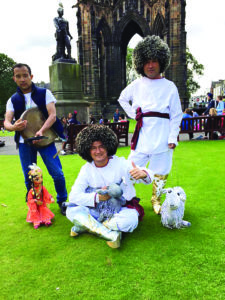
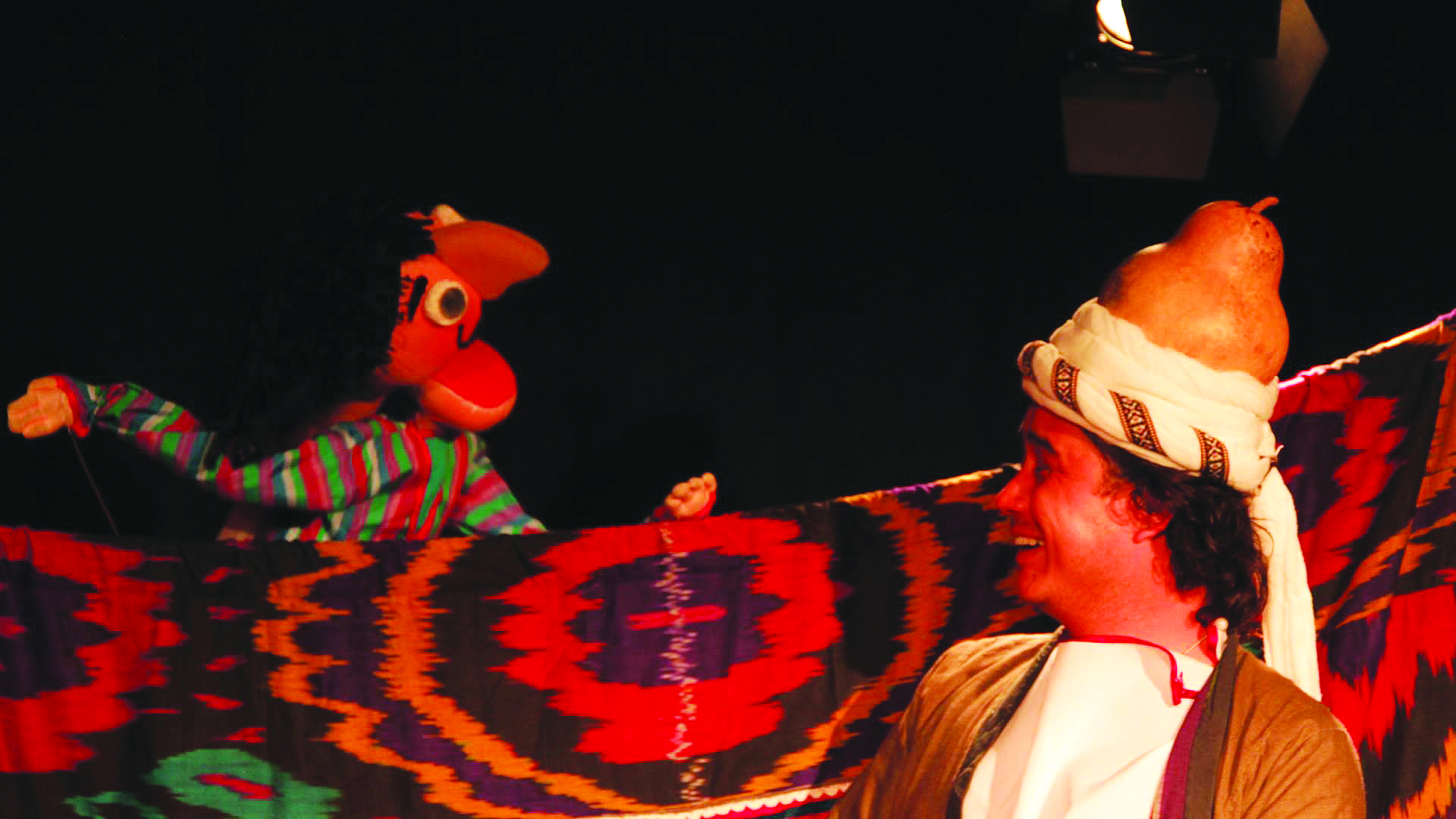
It was surreal to see these people from the ancient land of Khiva sitting next to me in the train to Edinburgh, speaking in Uzbek, exchanging jokes and taking endless pictures on their phones. I was filming them in the train, trying to make links between past and present. Khiva, a city on the Great Silk Road, is the motherland of the famous dance, Lazgi, and also the origin of puppetry arts in Central Asia. Puppetry is one of the oldest performing art forms in Uzbekistan. Puppet performances have been mentioned in the history records of Central Asia from the first century A.D. and were always hugely popular among the people. For a long time the markets of the Central Asian cities hosted shows by puppet masters. Puppet shows of the past were known to be subversive as they parodied the ruling classes and brought forth the issues and wounds of society in a humorous form. Till today, many artists and craftsmen of Uzbekistan have preserved the art of making beautiful, traditional puppets with intricately embroidered national clothes.  The heads of puppets are made out of papier-mâché and are painted in oil, and the clothes are hand stitched from local materials, such as vibrant atlas cloth.

These puppeteers and their wives have been crafting puppets for the past 20 years. They were self-taught and now they are travelling the world, sharing their stories. I tried to picture dedicating my entire life to one vocation and mastering it to perfection. That must take real dedication and passion, not the kind of passion kids on social media exhibit by posting endlessly about their favourite topic at that moment, but a different kind of passion, a real commitment, the kind that swallows you whole, day after day, year after year.

As soon as we arrived in Edinburgh we were swept off our feet by the kaleidoscope of bright colors, characters and sounds. The streets were buzzing with life and excitement. The theatre group changed into their costumes and we distributed leaflets, screaming out joyfully “Puppet show!, as some of our forefathers must have done over the centuries. There was nothing in the world more important than puppets and it was all for them. I felt as though they were alive and had minds and identities and it was the puppets who had come to visit the city.
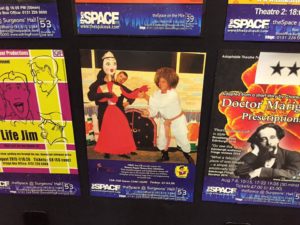
The next day it was show time. I met the group early at 8 am for the rehearsal. During the rehearsal the director was working together with technicians to coordinate and synchronise sound and lighting. As a filmmaker, I am used to the idea that sound design will come in post-production and the only thing I have to do is monitor the sound levels while recording. Being in a theater made me realise the anxiety and intensity of having to do everything live. It had to be perfect and everyone had to be on the same page.

The performances took place at Surgeons Hall on Nicholson Street later that evening. The puppets were a major success with the children. Yuldosh, the Founder and Director of Orzu Arts, had to be the puppets’ personal translator, because the puppets did not speak English and he had to explain what they were up to:

“It’s the wedding anniversary of an old man and old woman and beautiful puppet dancers have come to perform Lazgi. The Lazgi dance originates from a folktale; there lived a king and he had 41 children and the youngest one of all, was the prettiest and his favourite. And that’s why the other wives got very jealous and threw the youngest one off a cliff. That day she was supposed to dance for her king and although she had her bones broken, the strong woman insisted that she still would dance for her king. And this is how Lazgi, the broken dance, was performed for the first time.”

Although the tale is sad, the performances were fun. Yuldosh was making jokes and the puppets were dancing and jumping around. I was surprised to realise that even within the limits of strict coordination and a tight time schedule, the whole group managed to improvise. The show was highly interactive, children were invited on stage to participate and they all loved making chit chat with Yuldosh throughout the show.

When I found out about the existence of Orzu Arts and their performance at the festival, I took it as an opportunity to continue exploring my main interest, Central Asian art, through the medium of documentary film. As Umberto Eco wrote: “to survive we must tell stories”.  I think that stories have the power to transcend cultural boundaries and create a deeper, mutual understanding. The film will screen in December 2015.

More excitingly, perhaps, the puppets and their show are coming to London in November for the Open Central Asia Book Forum and Literature Festival organised by Hertfordshire Press. So don’t miss out!


Text by Malika Suleymanova
 

Afghan Cultural Festival Invades London

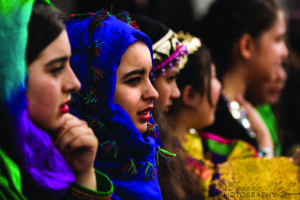
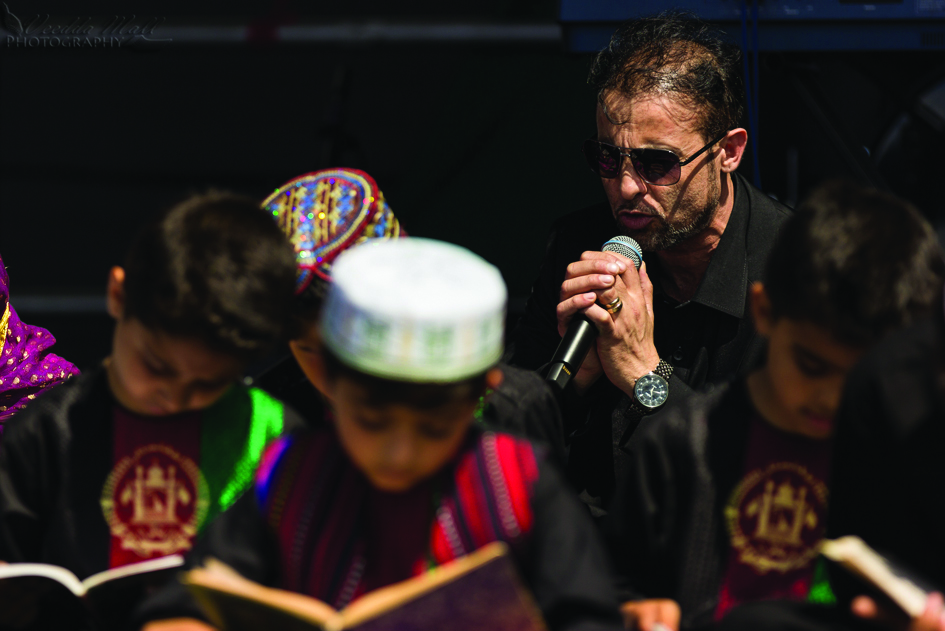
On a crisp, sunny Sunday morning in the middle of a pleasant British summer, Afghan Association Paiwand opened the gates of its first ever independently-run Afghan Cultural Festival to scores of queuing families, anxious to get into Allianz Park before midday to witness the official opening of the Festival. Eight hours of musical performances, family activities and athletics demonstrations began with speeches from the Mayor of Barnet, a spokesperson from Stop the War Coalition and Afghan Association Paiwand’s Chairman, who welcomed the public to enjoy the array of activities available at this year’s event.

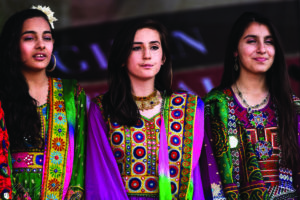
The Festival was the first of its kind in London: an inclusive event that succeeded in bringing together singers, actors, classical musicians, fine artists and photographers of different Afghan backgrounds to showcase their work – both amateur and professional, local and international – to 5,000 members of the UK’s Afghan community.

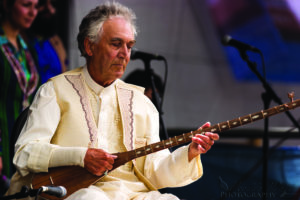
Upon entering the Park, visitors were met with a dizzying variety of Afghan and Central Asian food stalls scrawled across the Piazza, and were wooed by enthusiastic restauranteurs into deciding which dish to consume, many of which reminded the elder attendees of their childhood meals taken with families back home in Afghanistan. After feeding the family, guests were invited to wander through the indoor portion of the Festival, a massive hall which housed nineteen charity and commercial information stalls, a children’s storytelling and performance stage and a traditional Ghazal stage, complete with a rich afternoon of performances by renowned classical musicians, including Professor John Bailey and Veronica Doubleday, Milad Yusufi, Khair Muhammad Chavosh, Karim Haqdad, Clem Alford and Sirish Manji.

Across from the stage, three fine artists displayed and sold their works in an elegant exhibition space. Afghan illustrator, Sadaf Ahmadi and Afghan painter, Mr. Hadid, showcased their pieces alongside Iranian photographer, Shahriar Khonsari, whose work depicts the plight of Afghan refugees in Iran.

Meanwhile, throughout the rest of the park, children flew kites, played on fun fair rides and circus equipment, had their faces painted and watched falconry displays, while 350 Afghan footballers played an all-day, seven-a-side tournament.

As performances on the main stage progressed, the crowd on the pitch grew into a massive sea of dancing, eating and celebrating audience members. Three well-known presenters led the crowd through children’s choir and theatre performances, and a number of opening acts, including Uzbek singer Khair Muhammad Chavosh, Scottish-born Clem Alford, Bahir Amiri, Arash Barez, London-based Elaha Sroor, Tawab Arash, rapper Bejan Zafarmel and Bashir Maidani. Finally, the beautiful Mozhdah Jamalzadeh, a Canadian-Afghan singer and activist waltzed onto the stage in a striking yellow dress before a cheering crowd of young girls and long-time fans, performing a number of her well-known favourites. As the sun began to set, headliner Sediq Shabab appeared onstage to close the festival with an hour-long performance of his best hits.

The cheery faces of children and adults alike beamed throughout the day as they enjoyed what was on offer at the event. One Festival-goer from the community said, ‘The venue, the music, the food, the stalls, the security and overall the environment was very enjoyable. Thank you to the hard-working and responsible volunteers who did a great job. It was the first time that my children told me they had enjoyed an Afghan event in 20 years.’

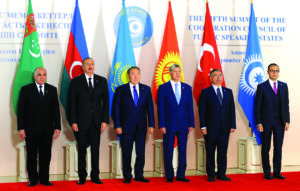
Astana Hosts the Fifth Summit of the Turkic Council

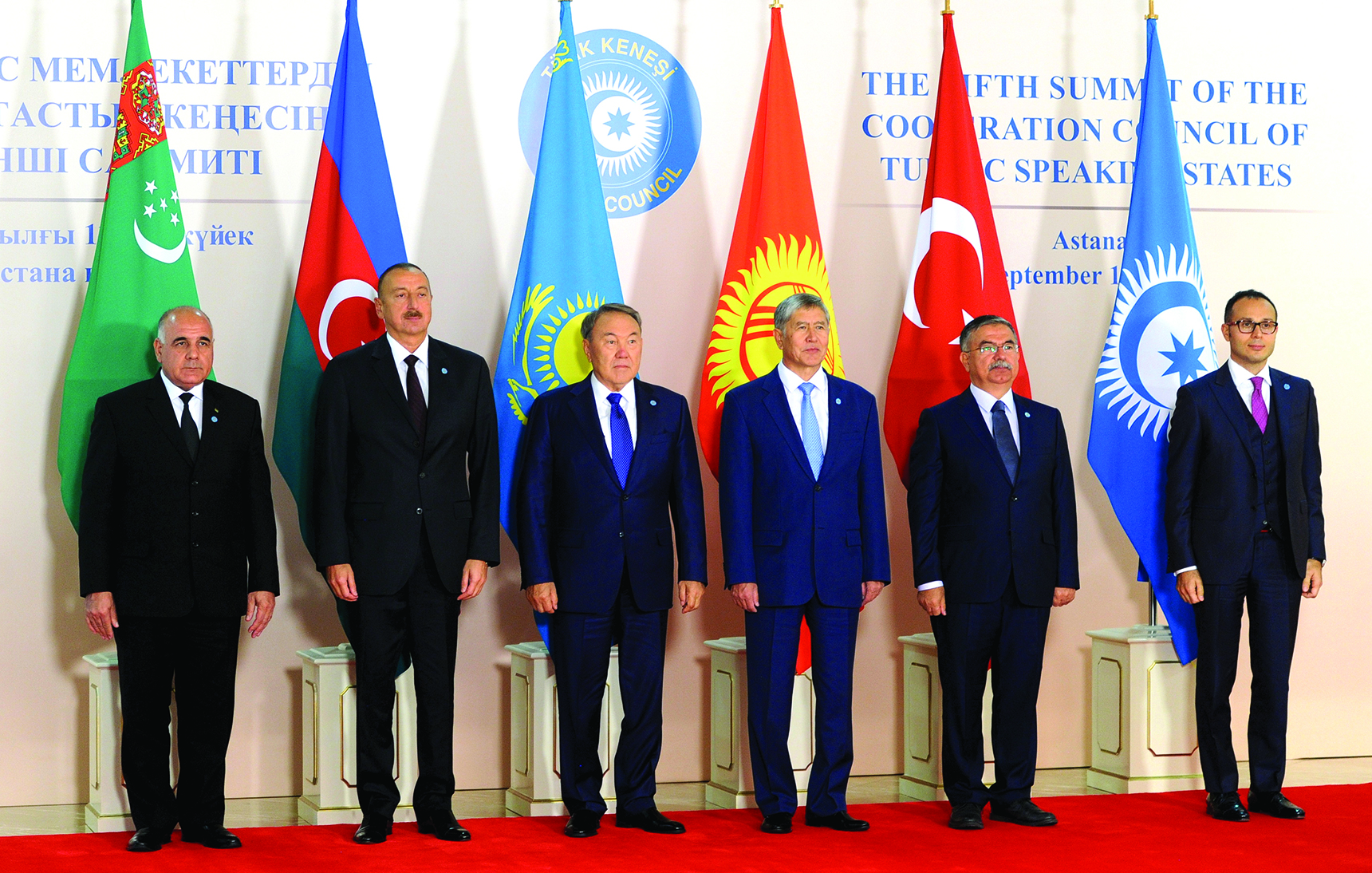
On 11th September 2015 Astana hosted the Fifth Summit of the Turkic Council. This was the second summit held in Kazakhstan and the fifth anniversary of the Summit.

The Summit of the Turkic Council is a unique event that brings together countries with a long history, which have common Turkic roots. The main purpose of the event is the development of comprehensive cooperation between Member States. The Cooperation Council of Turkic Speaking States was established with the signing of the Nakhchivan Agreement of 3rd October 2009, and the first summit was held on 20th – 21st October 2011 in Almaty.

The Fifth Summit was attended by the heads of states Ilham Aliyev (Azerbaijan), Almazbek Atambayev (Kyrgyzstan) and by the head of the Grand National Assembly of Turkey, Ismet Yilmaz. The Deputy Prime Minister of Turkmenistan Sapardurdy Toylyev also participated as a guest host.

The summit was also attended by the General Secretaries of the Turkic Council, TURKPA, TURKSOY and by the presidents of the International Turkic Academy and the Foundation of Turkic culture and heritage.

During the summit, chairmanship was handed over from Turkey to Kazakhstan.

The heads of member states have approved the report of the Secretary-General of the Turkic Council about its activity in the past year. There was also an agreement signed for the emplacement of the Deputy Secretary General of Turkic Council and President of the Turkish culture and heritage.

The heads of delegations have resumed the activities of the past period and set up perspectives and ways of future development for further strengthening cooperation in economic, cultural, educational, scientific, touristic and information fields. Much attention was paid to the issue of further institutional strengthening of the Turkic world and its role in regional and international security.

The conference, devoted to the 550th anniversary of the Kazakh Khanate, was held as a part of the Summit of the Turkic Council. The conference was opened by the President of the Republic of Kazakhstan, Nursultan Nazarbayev, in attendance of the Heads of States of the Turkic Council. The opening ceremony was held at the Ak Orda Presidential Palace, where Nursultan Nazarbaev made the welcome speech.

The President of Kazakhstan Nursultan Nazarbaev called the Fifth Summit of the Turkic Council “an important step towards the integration of the Turkic world”. The Head of State stressed the need to accelerate the adoption of the concept of integration of the Turkic world as proposed by the Turkic Academy.

The President of Kazakhstan noted that obtaining future observer status at the UN and OIC by the Turkic Council will greatly help to meet the common interests of member states.

The participants of the summit came to a decision that the Sixth Summit of the Cooperation Council of Turkic-speaking states will be held in 2016 in Cholpon-Ata (Kyrgyzstan) and will be devoted to the subject of “National Sport”.

WHY YOU SHOULD TRAVEL TO KAZAKHSTAN

OCA #21  SPRING 2015  WWW.OCAMAGAZINE.COM Text by Andrew Glenister

Before visiting Kazakhstan, the country had never really been on my radar. I knew where it was, and a little of its history, but I had never considered it as a holiday destination. I definitely do now. And I would recommend that anyone with an interest in a more adventurous type of holiday consider it too.

Though my time there was short, eight days in all, it was big on experiences. Bearing in mind my adventure was primarily limited to southern Kazakhstan and the Caspian coast, here, in no particular order, are my top five reasons to visit Kazakhstan.

CHARYN CANYON
Charyn Canyon is a few hours east of Kazakhstan’s largest city, Almaty, and can easily be visited on a day trip. Part of the Charyn National Park, it was easily the most ‘touristy’ part of my adventure, with signposts guiding you down to the base of the canyon. Do not let this deter you though, as the surroundings are magnificent. In the layering of the canyon walls you can see how this land was built over tens of thousands of years, and in the fast flowing Charyn River at the bottom how it was all carved away.

THE MAUSOLEUM OF KHOJA AHMED YASSAWI
Kazakhstan has four UNESCO World Heritage Sites. One of them is the Mausoleum of Khoja Ahmed Yassawi in the city of Turkestan. It is one of the most impressive buildings I have ever had the pleasure of visiting, easily the equal of more famous religious landmarks such as St Pauls Cathedral in London or the Sagrada Familia in Barcelona, despite the fact that it remains incomplete more than 500 years after building began.

BAIKONUR COSMODROME
When most people think of watching rocket launches they think of the Kennedy Space Centre; it is, after all, where the first men on the moon launched from aboard Apollo 11. But it is worth remembering that the first man-made object in space, the first man in space, and the first woman in space all departed from Baikonur Cosmodrome. That alone makes it worth a visit. But if you want to see something truly special, and make your friends jealous in the process, try visiting during one of the regular rocket launches.
A Soyuz rocket ready for take-off

THE RUINS OF SAURAN
Sauran. Not Sauron. There be no Hobbits here. But there are extraordinary panoramic views of the Kazakh steppe. An old fortress city of the Silk Route, it is now a collection of partially excavated walls offering a fantastic, tourist-free, view of the how the eastern and western worlds traded and communicated nearly a millennia ago.

THE AK-MECHET CAVE
A hidden treasure. Those three words best sum up this otherworldly cave. It is so hidden that, at last check, two of the top four search results on Google are my blog. It is probably for the best that it remains hidden, lest the calm, tranquil, and spiritual feeling be spoilt. From the dripping of water from the roof of the cave, to the assortment of birds and bats twittering, and the extreme calm that comes from being out of winds way, Ak-Mechet Cave is an experience like no other.

ADOPTING THE KAZAKH WAY OF LIFE

OCA #21  SPRING 2015  WWW.OCAMAGAZINE.COM

Different people are drawn to Central Asia for different reasons. Indeed many come by accident, knowing little of what awaits them or how life changing it could be.

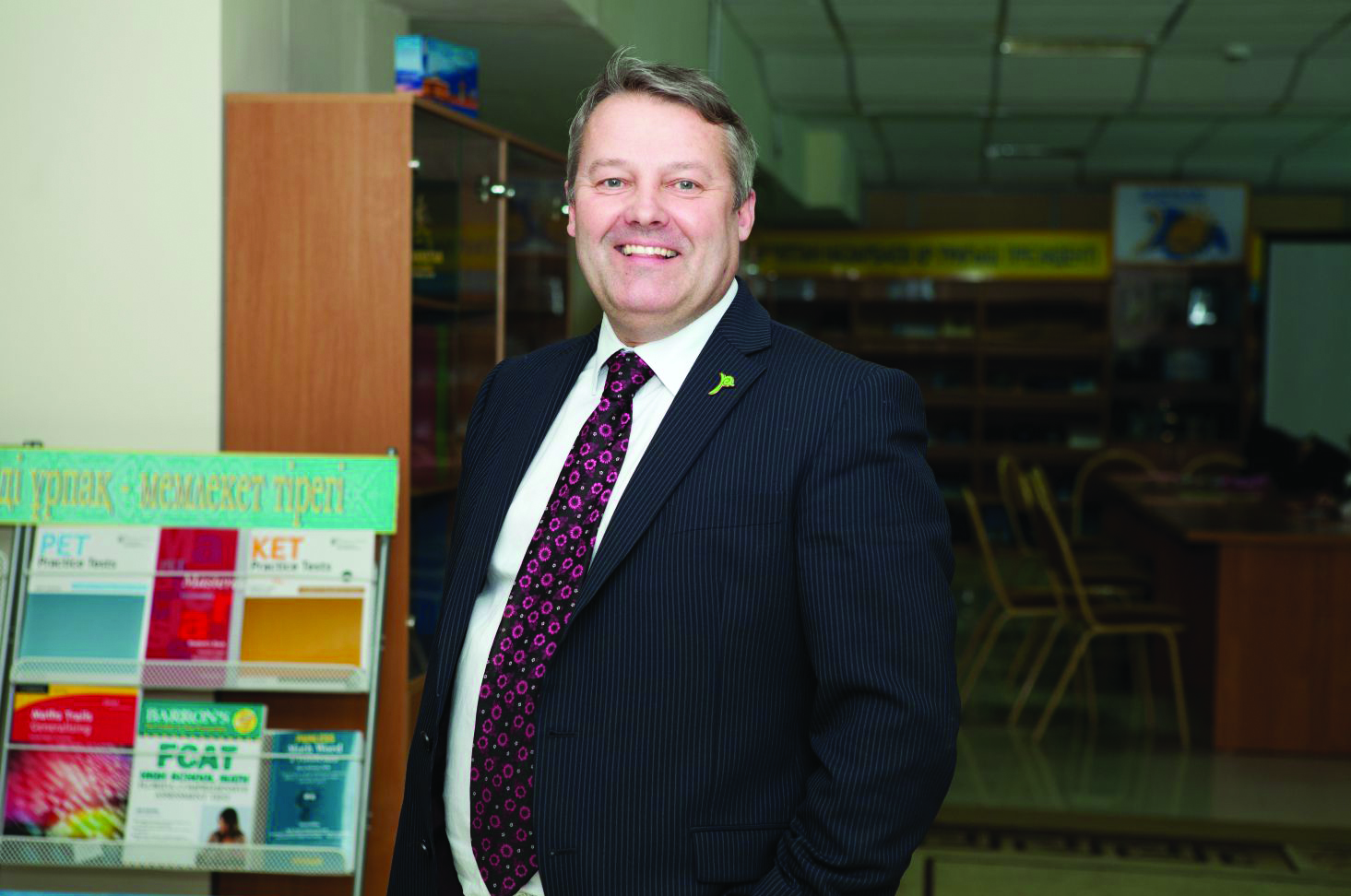
Once such person is Gareth Stamp who came to Kazakhstan five years ago for what he describes as his ‘daily adventure’.

‘I remember seeing a small advertisement in a newspaper in Great Britain asking for teachers to come to Kazakhstan and help develop the education system. So I applied and was successful, but I have to admit that I did not even know where Kazakhstan was or what would greet me. I now feel very ashamed that this wonderful country and its amazing people were not even on my geographical radar.’
Five years later, Gareth has become a well-known figure in Astana, networking and sharing his experiences with the quickly expanding international community. He is the president of the newly formed Rotary Club of Astana. Rotary is an international organisation with over two million members worldwide. It is the largest NGO and brings likeminded people together to do humanitarian projects, both in their local community and internationally. In Astana they are already fundraising for a number of projects involving disabled children, orphanages and other disadvantaged groups. The Astana club has grown quickly, having twenty five members from different professions and backgrounds.

‘Rotary has become a big part of my life and I am very proud to have been elected as the first president in Astana. Although we are not the first club in Kazakhstan we are the biggest already and aim to carry on the good name of Rotary here in Central Asia. It is not just about the projects it is also about the fellowship and it has become a great social gathering too. Real friendships are made and we have a common goal to keep us together like a family’

Gareth’s original role at the Nazarbayev Intellectual Schools involved helping to write the new curriculum for Kazakhstan, train teachers and develop a new education model for the country. He has since moved to Haileybury Astana, the British School, as their Director of External communications, using his contacts and management skills to help market a fast growing educational institution.

‘Kazakhstan and Astana in particular is now my home. I love the people and opportunities that are here. Every day is an adventure.’

‘One of the biggest issues here is the scale of the country. There is so much to see but travel takes longer than you would expect. Rather than get on a plane I allow a little extra time and take a train. It is amazing the new friends that you meet stories you share and barriers that you break down. My Russian and Kazakh are limited but once people find out there is a foreigner on the train communication happens. I often wondered how ancient explorers like Marco polo broke down the language barriers and now I know. People are naturally curious and Kazakh’s are naturally generous. This linked to a pride in their country and culture makes me richer with every journey I take.’

Gareth records most of his experiences through his photography, drawings and in a diary, sharing his new life with his friends in the west through social media. He has also had exhibitions of his work in Astana. He has become part of the growing Art and Design scene in the capital and was recently presented with an award for services for the development of design in Kazakhstan.
The world for Gareth is very different but his story is not unique. As Kazakhstan develops its International status so more travellers come to see it for themselves, to do business and increasingly as tourists. With future events, such as Expo 2017, the country is revealing more of its natural and manmade attractions that put Kazakhstan on the map.