2012 John Smith Fellowship Programme

john-smith

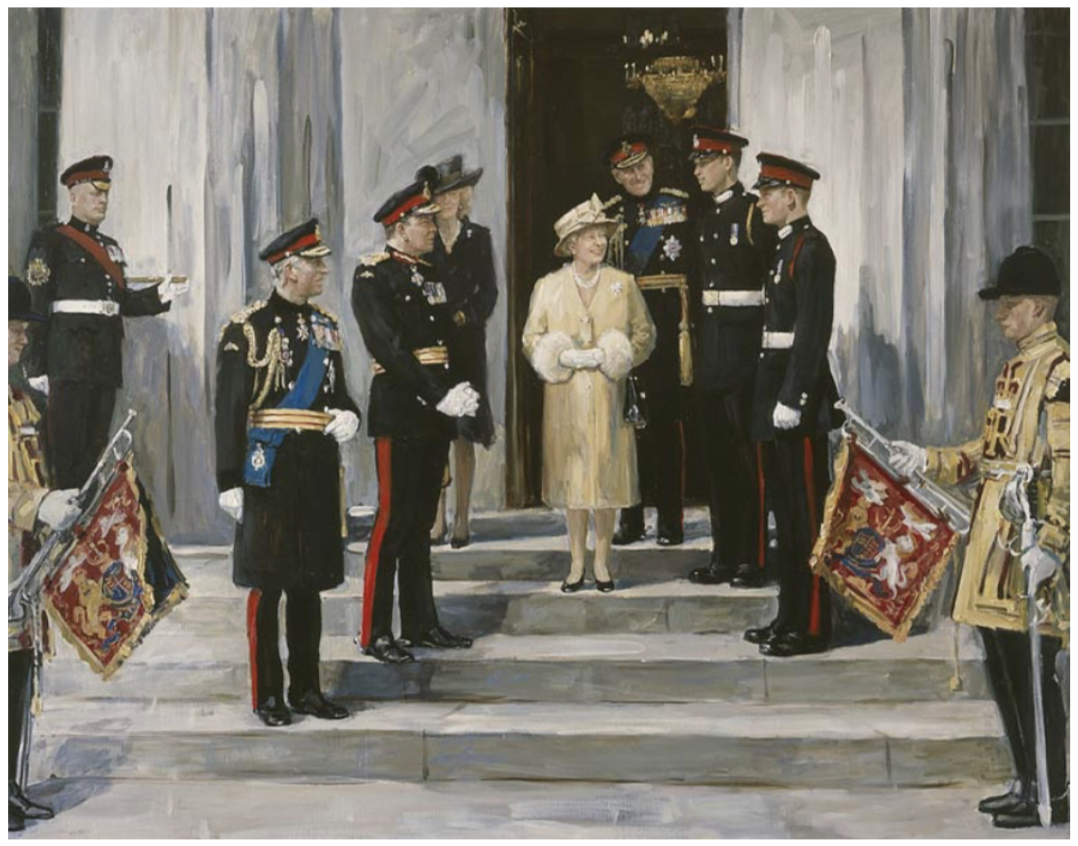
From 1st November 2011, the John Smith Memorial Trust is accepting applications for its 2012 Fellowship Programme.

Applications for Fellowships are invited from the following countries:

Armenia, Azerbaijan, Georgia, Kyrgyzstan, Moldova, Russia, Ukraine

The Fellowship aims to strengthen and deepen awareness of good governance through a three week programme in the UK and placements that show the workings of organisations within a long established democracy. Selection is based on a combination of the leadership potential of the applicant and the quality of the action plan they pr Continue reading

NEWS CONFERENCE

On May 26, 2011 at 12:00 Kazakhstan’s Minister of Economic Integration Affairs Zhanar Aitzhanova will hold a news conference  to discuss Kazakhstan’s efforts to join the World Trade Organization and the formation of the Customs Union with Russia and Belarus as well as integration process in Central Asia.

Continue reading

Remembering Khojaly

This February will mark the 19th anniversary of one of Azerbaijan’s most haunting and tragic events in its recent history: the Khojaly Massacre that occurred from 25th -26th February 1992. That night Armenian armed forces, with the support of infantry guards regiment no. 366 positioned in the region since Soviet period seized control of the town of Khojaly in the disputed territory of Nagorno-Karabakh. 613 civilians died that night in the aggression, including 106 women and 83 children. Others remain unaccounted for, lost in the confusion and melee or captured and taken prisoner, left at the mercy of their aggressors.

Continue reading

OVER 160 COMPANIES WILL ATTEND MINEX CENTRAL ASIA 2011 – PRIME MINING AND EXPLORATION FORUM ORGANISED ON 5-7 APRIL 2011, ASTANA

Over 160 companies from Central Asia, Russia, Ukraine, EU, USA, Canada, Australia, South America and China have confirmed participation in the forum. Over 400 delegates are expected to attend. View the list: http://minex-forms.s3.amazonaws.com/2011/asia/MINEX-CA-2011-participants.pdf

Continue reading

Cherie Woodworth seminar: 14th­16th-Century Rus’ in the Economic System of the Steppe’s “Great Churn” was held on Feb. 11

The Inner Asian and Altaic Studies program is co-sponsoring a talk was given on Friday, February 11, in the Early Slavists Seminar series.

Continue reading

14th­16th-Century Rus’ in the Economic System of the Steppe’s “Great Churn”

A distribution of:  Central-Asia-Harvard-List.  The Announcement List for

Central Eurasian Studies at Harvard University

SEMINAR- Cherie Woodworth: 14th­16th-Century Rus’ in the Economic

System of the Steppe’s “Great Churn”, Feb. 11

Posted by: Inner Asian and Altaic Studies <iaas@fas.harvard.edu>

The Inner Asian and Altaic Studies program is co-sponsoring a talk to be given this Friday, February 11, in the Early Slavists Seminar series.

How Many Horses?

14th­16th-Century Rus’ in the Economic System of the Steppe’s “Great Churn”

Cherie Woodworth (Yale University)

February 11, 12:15 to 2 p.m.

CGIS South, 1730 Cambridge Street, Seminar Room S354

Summary of Paper

This paper considers the productive capacity of livestock producers (pastoralists) on the grasslands of the Eurasian steppe in the early modern era.

These grasslands provided a critical resource input in the early-modern era which made possible the rise of a large, powerful, centralized state in Russia.

An even larger annual influx of meat, horsepower, and military materiel (in the form of war horses) likewise flowed from the steppe into China, Anatolia, Persia, and India in a continent-wide symbiotic exchange of resources I have called “the Great Churn.”

The economic role of horses and other livestock from the steppe has not been considered for example, by Kenneth Pomerantz in his study The Great Divergence [2000] nor by Victor Lieberman in his new comparative study Strange Parallels [2009].  This argument follows on that of Peter Perdue in China Marches West [2005], Christopher Beckwith in Empires of the Silk Road [2009], and James Scott in The Art of Not Being Governed [2009].

LECTURE: The First Free Generation After the Collapse of USSR: Challenges and Opportunities

LECTURE: The First Free Generation After the Collapse of USSR: Challenges
and Opportunities
SPEAKER: Dr. Nadia Diuk, Vice President, National Endowment for Democracy, USA
Time: 4:00 pm, December 9, 2010
Venue: CH/1, AUCA
Language: English
Continue reading

Kazakhstan to join Russia-Ukraine space program

Kazakhstan, Ukraine and Russia will work together as part of the Cosmotrans space cooperation project, Ukrainian First Deputy Prime Minister Andriy Klyuyev said on Thursday.

The project provides for the joint use of Kazakhstan’s Baikonur space center.

Kazakhstan and Ukraine signed a space cooperation agreement during Kazakh President Nursultan Nazarbayev’s recent visit to Ukraine.

“It [Cosmotrans] used to be a Ukrainian-Russian project, but now it is a tripartite project between Ukraine, Russia and Kazakhstan,” Klyuyev said.

The Ukrainian Cabinet of Ministers also expects to sign contracts with Kazakhstan to deliver Ukrainian-built An-148, An-158 and An-74 airplanes, he said.

RIA Novosti

USA-Eurasia Business Conference, Omaha, Nebraska, USA, October 11-12, 2010

The USA-Eurasia Business Conference will place a keen focus on several parts of the Eurasian region including Russia, Central Asia, and the Caspian region. Significant political changes in those countries during the past two decades, coupled with developments in technology, logistics, and infrastructure have created new opportunities for trade and economic cooperation. The Midwest has tremendous potential to become fully engaged in this region. To increase strategic economic collaboration involving mutually beneficial trade and development initiatives, the conference will bring together key players in both regions to discuss business opportunities within the framework of establishing sustainable long-term relationships.

Main Topics

  • Discussion of US Policy in Russia, Central Asia and the Caspian Region from the economic cooperation perspective
  • Discussion of investment opportunities in industries such as agriculture, energy, chemical production, food, transport, building materials, mining, information technology and communications, health care, equipment, etc.
  • Review of countries’ short and long-term investment climate
  • Discussion of laws and regulations promoting foreign direct investment
  • Discussion of practical market entry strategies, operational set up, and risks