AZERBAIJAN – ARMENIA DISPUTE: A FUTURE TOURISM DESTINATION?

OCA #21  SPRING 2015  WWW.OCAMAGAZINE.COM Text: by Dr Shahid Qureshi

For Azerbaijan, after the occupation of its sovereign areas, Armenia has proven to be something of a neighbour from hell, causing harm to the millions of people in the occupied territories and those who are displaced as a result. Armenians are backed by their former Soviet big brother, who seems to be joining in and supporting this illegal occupation. This issue has obviously invited international players into the region. If Russia was a ‘wise elder brother’ it would have helped resolved this issue long time ago. This issue has been going on for over 20 years and had the Russians resolved this issue, there might not be Ukraine on its doorstep. Whilst it is, of course, not as simple as that but it is also not that complicated in that one has to do things the hard way, like it or not.

The UN has, regrettably, become a useless tool for the majority of countries and the UN’s Veto allocated to some members must be rationalised in 21st century. This lollypop of non-permanent attendance of the security council for a limited period is nothing more than a scam. This whole thing is non-democratic and irrational. The UN is good at putting such issues into the deep freeze. Maybe it should be moved to somewhere in Europe or Asia where more people live. So far, it has kicked the issue of Nagorno Karabakh onto the sidelines, which suits both Armenia and its backer, Russia.

Now, one has to find a realistic solution to this injustice and stop the sufferings of the refugees and internally displaced people in the region. These are hotspots that must be handled carefully and wisely. There is no way in which all parties will be happy, so we need to identify the ‘victims and perpetrators’ of this issue. On this the UN has done some work and passed four resolutions. In April and November 1993 the UN Security Council passed four resolutions: numbers 822, 853, 874 and 884 demanding the immediate withdrawal of all occupying Armenian forces from Azerbaijan. Due to the full support of the Russian Federation all UNSC resolutions have been ignored by Armenia.

In a conversation with Mr Hikmat Hajiyev, the spokesman of the Government of Azerbaijan at the foreign ministry in Baku, during press briefing this author gave him an example that: “If you don’t put sugar in your tea, no matter how many times you stir or shake it, it will never be sweet and that is your position with the issue of Nagorno Karabakh which is occupied by the Armenians. You need to do something different and more solution focused with all options open.
Furthermore he was told that: “The UN has become a useless body for Muslim countries especially and it has completely failed to protect the member states and the rights of the people. Having said that: The UN is too quick to resolve East Timor and South Sudan just because they are Christian dominated areas and it suits the security council where not a single Muslim country permanent member with veto powers. 1.5 billion Muslims from over 55 countries are therefore not represented. The issues of Kashmir and Palestine are long standing with UN resolutions since 1948”.

Speaking to people from the occupied territories they are frustrated and angry, saying: “they can take their areas back swiftly from Armenia”. They were forcibly displaced by the Armenians and have become refugees within Azerbaijan. If this issue is not addressed, there might be a movement for the liberation of Nagorno Karabakh. According to the UN charter “people occupied by foreign forces have the right to ‘resist and start armed liberation’ until the occupying forces leave their area”. That is true for Kashmir, Palestine, Iraq, Afghanistan and Syria. Imagine if international players jumped to support the liberation rights of the occupied people? With the ‘Berezniki Doctrine’ in place it would become impossible for big brother Russia to contain and its influence in the region will shrink.

As per the ‘Brzezinski Doctrine’, Turkey is the new Pakistan in the region. As is the US habit, they will put too much pressure on their friend until they collapse, are damaged and destroyed. We have no reason not to believe US President Jimmy Carter’s National Security Advisor, Zbigniew Brzezinski, who reportedly said that the US lured the Soviets into the Afghanistan trap that gave the USSR its Vietnam.

At the same time Zbigniew Brzezinski’s Interview with Le Nouvel Observateur, published in January 1998 makes clear: “The Muslim terrorist apparatus was created by US Intelligence as a geopolitical weapon”.
The collapse of the USSR in 1991 and political instability in Azerbaijan and in Armenia encouraged the Armenians to attack Azerbaijanis in Nagorno-Karabakh, in the city of Khojaly in 1992. Known as the Khojaly genocide, thousands of Azerbaijani residents were killed or captured and Khojaly City itself was destroyed. In his book Black Garden, (2003) British journalist Thomas de Waal published an interview with the President of Armenia and an Armenian field commander commenting on the destruction of Kholjaly. The former field commander said: “Before Khojaly, Azerbaijanis thought they could play tricks with us. They thought Armenians would never touch civilians. We were able to break that myth. In 1993, the Armenian armed forces occupied six districts surrounding Nagorno-Karabakh, resulting in the occupation of almost one-fifth of Azerbaijan’s territory.”

Can we resolve the conflict? If nothing is working for now Azerbaijan can take this matter to the International Criminal Court (ICC), International Court of Justice, and the European Court, and if rules need changing with regards to jurisdiction of the ICC they must. We cannot obviously expect the perpetrators of crimes, in this case Armenia, to accept the responsibility of their actions. Hence rule must be changed to make the ICC a viable and effective body.

The Prime Minister and military and civil officials of Armenia must be put on trial for war crimes and atrocities committed in International court of Justice. If that is not possible then:

(a) Azerbaijan’s Supreme Court must take “Suo motto” and order anopen trial of those responsible for genocide in Nakgorno Karabakh.
(b) The Supreme Court has jurisdiction as crimes have been commented on Azerbaijan’s soil.
(C) The Supreme Court Order Government of Azerbaijan to issue Red Warrants to the Interpol for the arrests of the Armenian leaders involved in the war crimes and genocide of the people of Azerbaijan.

This issue has become a ‘ping pong’ game and talk shop for the international players who could yet resolve it in one day. Arms dealers from various countries have been able to sell arms and equipment to Azerbaijan. On the other hand, officials say that Russian forces are supporting the Armenian army and there are daily exchange of fire causing injuries and deaths. The conflict if very much alive.

According to the latest reports from the region ‘tensions are on the rise’ and the patience of Azerbaijan is likely running out.

Armenia says a ceasefire with neighbouring Azerbaijan over the breakaway region of Nagorno-Karabakh no longer exists, describing frequent skirmishes at the front line as “war”. Artsrun Hovhannisyan, a spokesman of Armenia’s defence ministry, said that Azerbaijan was using “all existing armaments: tanks, howitzers, and anti-aircraft artillery” against Armenian soldiers in the disputed region. “What we have today is a war,” said Hovhannisyan. “We must use the word ‘war’ as there is no ceasefire anymore.”

Azerbaijan responded with counter-accusations, blaming Armenia for the recent escalation. “Ceasefire violations are taking place because of the illegal presence of Armenian forces in the occupied lands of Azerbaijan,” Hikmat Hajiyevm, Azerbaijan’s foreign ministry spokesman, told the AFP news agency.

“Armenia has to withdraw from the seized lands … only afterwards can sustainable peace be guaranteed in the region.” Energy-rich Azerbaijan, whose military spending exceeds Armenia’s entire state budget, has repeatedly threatened to take back the breakaway region by force if negotiations fail to yield results. Moscow-backed Armenia says it could crush any offensive.

Earlier in December 2015, Azerbaijani tanks shelled positions in the Nagorno-Karabakh region for the first time in more than 20 years, the rebel defence ministry said. The Organisation for Security and Cooperation in Europe (OSCE) mediators recently warned “the status quo has become unsustainable”.

Speaking to a few defence analysts of the region, they were very positive about improving relations with Armenia if it let go its ‘nostalgic claims’ that they call the ‘Armenian illness’. One of them was of the view that in case peace prevailed, the Armenian economy would go sky high by just tourism activity alone. He said: ‘if tourists from Azerbaijan and region buy just one bottle of water on their way it will make enormous difference to the economy. Armenians will be able to access the local sea and land routes of neighbouring countries including Turkey, Azerbaijan, Georgia and of course Russia.

MOSCOW SILK ROAD FORUM PROGRESSES CROSS-CULTURAL DEVELOPMENT

OCA #21  SPRING 2015  WWW.OCAMAGAZINE.COM Text by Kristina Glazunova

Over the last few years attitudes to culture, the understanding of its importance and role in modern society, the recognition of culture as one of the most important resources for social and economic development have radically changed. As a result, the implementation of a program of cultural development, giving a special recognition to national cultures of peoples and nations, with specific steps identified is critical.

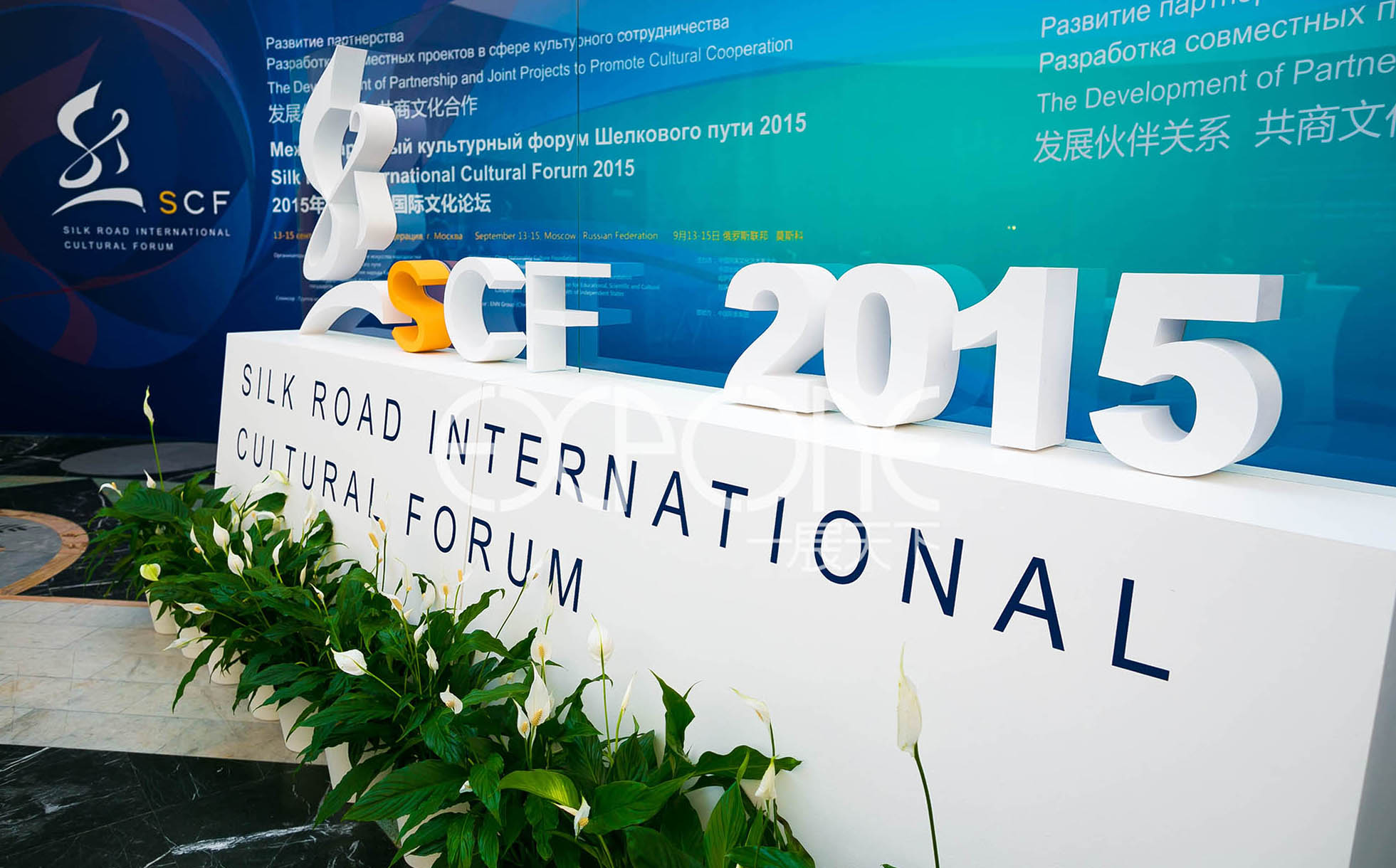
The role of culture as a driving force of social development is the subject of much discussion in the business community who held a series of activities at different levels in Moscow at the end of 2015. One of them was the II International Cultural Forum of the Silk Road held on September 14-15, 2015.

The forum gathered participants of the SCO countries and representatives of other states located along the Great Silk Road. There were directors of museums, libraries and theaters, scientists and cultural figures, mass media representatives from 16 countries (including China, Kazakhstan, Mongolia, Pakistan, Russia and Turkey), and a representative of Open Central Asia magazine, Marat Akhmedjanov.

This year’s topic was “Development of Partnership: The development of joint projects in the field of cultural cooperation.” During the meeting participants talked about the prospects and the state of cultural exchanges, projects in the field of preservation and development of intangible cultural heritage, the use of tourism resources of the Great Silk Road. The result of the meeting was an agreement on the establishment of cultural cooperation called “Silk Road – Eurasia”.

The Forum’s mission was to provide participants with numerous opportunities for international exchanges and co-operation, promote the development of the cultural traditions of different countries and to develop co-operation in the field of culture between the foreign partners.

The history of the Silk Road shows us just how important it is for countries of this region to keep in touch, maintain and develop their own cultural traditions, to borrow the best in the experience of their neighbouring countries in order to maximize development. Encouraging intercultural dialogue and strengthening co-operation was the outcome of the Moscow meeting culminating in the signing of an agreement to establish a new inter-state structure titled, the “Organization of cultural cooperation “Silk Road – Eurasia””.


MIKHAIL SHVYDKOY RUSSIAN SPECIAL ENVOY FOR INTERNATIONAL CULTURAL CO-OPERATION

Kyrgyz-born Mikhail Shvydkoy is no ordinary diplomat. Since 2008, he has been the Special Envoy for International Cultural Cooperation to President Dmitry Medvedev, which followed a stint as the Minister of Culture of the Russian Federation. Before becoming Minister of Culture, however, Shvydkoy held many prestigious positions, including editor-in-chief of Channel 5 and later Chairman of Russian State Television and Radio Broadcasting Company, Deputy Minister of Culture and General Manager of the Kultura Publishing Complex. Open Central Asia had the exciting opportunity to interview this remarkable man and capture some of his thoughts on journalism and Russian culture. “I was born in Kyrgyzstan and left there at the age of nine months,” Shvydkoy begins the interview. “I returned for the first time more than half a century later, when I was already Minister of Culture for Russia. The Kirghiz have a saying that “you come to die where the first drop of your blood at birth was spilled on the ground.” Kyrgyzstan –a place of my biological attachment, I get a great pleasure when I arrive there. I am pleased with all the positive changes that are taking place at my homeland.” Today Shvydkoy is a distinguished professor of foreign theatre history and a member of the Academy of Humanities. He is also a member of the Russian Writers Union, Union of Theater
Workers, and Union of Journalists having published numerous books, including Drama, Theater, Life; Secrets of Lonely Actors; and Notes on Foreign Theater of the Second Half of the Twentieth
Century. He has authored numerous publications in various newspapers and magazines and over
600 academic papers. “I graduated from the theatre department of The Russian University of Theatre Arts,” he continues. “I started working in journalism since 1967. I changed and the journalism in our country changed as well. In Soviet times I worked in the “Theatre” magazine. It was a “thick” professional journal in which it was possible to deal with professional issues that are not fully reflected on television, radio or newspapers.”

When it comes to the effect that this early career has had on him and the changes it had driven it is
clear that Shvydkoy has a bond to the profession, almost as strong as to his homeland. “Today,
it’s accepted to blame journalism, and, in fact, journalism is an intermediary between the public,
the authorities and the individual. The mission of journalism is very important, but if it is real, profound and truthful journalism.” Shvydkoy has been awarded the Order of Honor from the Russian Federation and L’Ordre du Mérite from the Republic of France. He also holds the title of Merited Master of Culture from Poland. These awards are a sign of the international reputation and regard that he is held in. The idea of Russian culture is easy to promote for a man so embedded
within it. “As you know, since 1993 to 1997 I was the Deputy Minister of Culture of the Russian
Federation, since 2000 to 2004 -the Minister of Culture of the Russian Federation, since 2004 to
2008 I headed the Federal Agency for Culture and Cinematography. So I do not need to convince you
that culture, which is the guardian of tradition, not only provides the identity of peoples, but also is an
important tool for development.”

But the promotion of Russian culture goes further and deeper for Shvydkoy. “Russia and culture
– they are synonymous today, especially when the consumer society in the world is in crisis. It is not so much economic in the value sense but Russian culture takes a special mission. Unlike oil, Russian culture does not change its price – over the years it has increased. Unlike the ruble, it does not threaten devaluation, it’s still demanded. For example, we hold a semi-annual festival of Russian
culture in Japan and the interest of Japanese viewers of different generations is increasing.” He is not fazed by a question about the newly independent states of Central Asia trying to gain their own independent identity, away from Russia and Russian culture, either. “After the collapse of the Soviet Union new states formed on the post- Soviet territory,” he ponders. “Of course, we tried to achieve not only state independence, but autonomy and their own cultures. National identity has become their national idea. But it is important to understand that the Russian language remains the language of communication in the post-Soviet space. But, nevertheless, they lack the education and culture in Russian, as often politicians and intellectuals say.

“Of course, I have no illusions. I know that for a quarter century, the range of the Russian language has decreased significantly. But at the same time it is clear that the reference to the Russian language
in publications is still in harmony. Russian language in the post-Soviet space is important, because
through it, many people are attached to the world culture, to its scientific and artistic achievements.
In the former Soviet Union, Russian classical and contemporary authors enjoy the increased
interest, but not so on the global book market, where Russian books occupy about 2% of the total
circulation.”
Shvydkoy is particularly enthused by the number of projects launched within the framework of
the Year of Russian literature in 2015. “This will be able to change the situation. Russia’s participation in international book fairs should bring positive results. Recently, Russia has adopted a special program for promoting Russian literature abroad. So, in conclusion I want to say that the Russian culture needs no artificial promotion in the world, it is a necessary part of the need for spiritual nourishment, which is inherent in civilized humanity.”

Text by Kristina Glazunova

Latest events from The European Azerbaijan Society

The European Azerbaijan Society (TEAS) is a UK-registered pan-European
foundation dedicated to raising awareness of Azerbaijan and fostering closer
economic, political and cultural links between that country and the nations of Europe.
In addition to promoting the positive aspects of Azerbaijan, TEAS also highlights the
plight of the 875,000 refugees and Internally Displaced Persons (IDPs) within the
country. These people are unable to return to their homes and lands due to the illegal
occupation of Nagorno-Karabakh and seven surrounding regions by Armenia’s armed
forces – in defiance of four UN Security Council resolutions.
TEAS was launched in November 2008, having initially been established as the
London Azerbaijan Society four years earlier. The organisation now has offices in the
UK, Belgium, France, Germany and Turkey, along with a representative office in
Azerbaijan.
TEAS has three main facets to its operations:
 Culture – TEAS raises awareness of Azerbaijan’s rich and vibrant culture to a
worldwide audience by organising cultural events and operating as a
networking centre.
 Business – TEAS supports its membership of European and Azerbaijani
businesses. It provides a platform for organisations to establish links and
strengthen their existing business relationships via a programme of networking
opportunities across the regions.
 Public Affairs – TEAS works to increase awareness about Azerbaijan amongst
key opinion-formers, key decision-makers and other political, academic and
civil society stakeholders.
For more information on all TEAS events, both past and future, go to www.teas.eu

Azerbaijan’s Centrality in the Geopolitical Role of the Caspian

In the context of the refugee crisis and changing relationships between the West with
Russia and Iran – both of which are neighbours of Azerbaijan – this is a pivotal time
for the South Caucasus powerhouse to demonstrate its importance to the region. On
21st October these were highlighted during a panel discussion in Paris at L’Hôtel de
l’Industrie, headquarters of the Société d’Encouragement pour l’Industrie Nationale
(SEIN), located near the Sorbonne University, and the centrepiece of French industry
since 1852. The conference was organised by TEAS France, the International
Geostrategic Maritime Observatory (IGMO) and SEIN, and attended by over 60
delegates, including H.E. Elchin Amirbayov, Azerbaijani Ambassador to France; H.E.
Aurelia Bouchez, incoming French Ambassador to Azerbaijan; and diplomats from
the Iranian, Georgian, Russian and Turkish embassies, amongst others.

Azerbaijan is currently in the midst of an energy revolution. The development of the
Shah Deniz II full-field development has led to the 3500km, $45bn Southern Energy
Corridor, which will see gas piped through the South Caucasus Pipeline (SCP), Trans-
Anatolian Pipeline (TANAP) and Trans-Adriatic Pipeline (TAP) to an Italian
interconnector, thereby representing supply diversity for much of Europe, away from
overreliance on Russian resources. This will initially see up to 16bn m 3  (bcm) of gas
pumped to Turkey per year, and then Europe, by 2018 and 2020, respectively. The
corridor is being constructed at over-capacity, and has the potential to carry up to
31bcm, augmenting Azerbaijani Caspian supplies with those from Central Asia – and
possibly Iran – and transforming Azerbaijan into both a supply and transit country.
After Gilles-Henri Garrault, Vice-President: International Relations, SEIN, opened
the event, Ellen Wasylina, President, IGMO, presented the special edition of
the Geostrategic Maritime Review, which focuses on the Caspian region.
Marie-Laetitia Gourdin, Director, TEAS France commented: “This is an important
time to hear about the strategic importance of the Caspian Sea. Azerbaijan is a major
partner of the EU, located in the Caspian, and has established many business and
commercial relationships with EU member countries. This publication is a very
important addition to the available literature on the country.”
Gulmira Rzayeva, Senior Editor of the Geostrategic Maritime Review – The Caspian
Sea; Associate, Oxford Institute for Energy Studies, and Senior Research Fellow at
the Centre for Strategic Studies (SAM) under the President of Azerbaijan said: “It is
necessary to raise awareness of the countries around the Caspian Sea by organising
events of this type in Paris and other capitals in Europe. Energy is certainly the most
important issue in the Caspian region. EU countries are key customers for Azerbaijan,
as it reduces their reliance on Russian gas. Azerbaijan is developing the Southern
Energy Corridor, and this represents an alterative energy source to Russian Gazprom.
Liquiefied Natural Gas (LNG) will be particularly important in the future. Iran has the
resources, but it will need to produce more gas and oil.”
Dr Efgan Niftiyev, Expert, Hazar Strateji Enstitüsü, who moderated the panel
discussion, reiterated this, saying: “The Caspian is taking centre-stage in global
geopolitics and is central to the former Soviet space. The West is interested in
collaborating with the region in terms of energy security and has been primarily
responsible for the development of resources in the region. Now we are seeing local
companies involved in the development of the Shah Deniz field and construction of
the Southern Energy Corridor.”
Oktay Tanrisever, Professor at METU-Turkey, specialising in Regional Security,
Energy and Environment and Turkish Foreign Policy, commented: “The development
of the Eurasian Economic Union (EEU) since 2012 has resulted in Russia unleashing
its power in the region, and Russia and Kazakhstan – two littoral states in the Caspian
Region – are members of the EEU. However, Baku has demonstrated its ability to
pursue an independent policy.”
Jane Amilhat, Deputy Head of Russia–CIS Unit, DG Trade, European Commission,
continued: “We are in favour of greater economic integration, but this doesn’t really exist in the Caspian Region. The countries need to be integrated with the world monetary market, and Azerbaijan is coming closer to this. The EU is seeking market integration, energy security and supply diversification and hence the Caspian Region is particularly important to us.”

Agathe Thomas, ENGIE Representative in Baku, concluded: “Azerbaijan,
Turkmenistan and Kazakhstan account for 13 per cent of the world’s gas reserves.
With around 18 per cent of total reserves – making it the top potential supplier of gas
– it is possible that Iran will become a major export country, and this will be a
gamechanger. Azerbaijan is an oil producer with huge ambitions for gas and has the
potential to produce 30bcm per annum.”

Rich Palette of Opportunities Brought to the Heart of Brussels
On 14th October, more than 100 businesspeople and diplomats from across Europe
flocked to the prestigious Diamant Conference and Business Centre, near the
diplomatic area of Brussels, for the second Brussels Business Forum to highlight the
investment opportunities available in Azerbaijan. Bylined as Azerbaijan Through the
Eyes of International Investors, the event was organised by TEAS Benelux.
Marc Verwilghen, Director, TEAS Benelux and former Belgian Minister of the
Economy, Development Co-operation and Justice, acknowledged: “Europe has a new
heart – everyone seems to have discovered the ‘new’ Silk Road for which Azerbaijan
will, once again, be the epicentre. Azerbaijan has huge investment potential. The
objectives of Azerbaijan, Belgium, the whole of Benelux and the EU are the same. If
Azerbaijan is in your head, there will be fire in your heart, enthusiasm in your soul,
and dynamism in your body.”
Herman De Croo, Belgian Minister of State and the longest-serving Belgian MP,
spoke from his own experience: “I have visited Azerbaijan twice – in 2011 and this
year. Between those dates there was enormous change in the infrastructure, and I
noticed there has been an ongoing evolution in the receptiveness of the Azerbaijani
people to external business investment from Europe. The successful hosting of the
European Games in Azerbaijan is indicative of the drive of the authorities to be
anchored to Europe.”
The focus of the event was on changing preconceptions about Azerbaijan – a country
renowned for its oil and gas reserves. James Hogan, Managing Partner, Dentons Baku
– a TEAS member company – explained: “We have been active in Azerbaijan for 25
years. Azerbaijani investment policy is very open and, since independence, a stable
legal regime has been implemented. This now includes Special Economic Zones,
aimed at stimulating diversification of the economy.”
Haji Huseynov, Senior Infrastructure Specialist, World Bank, outlined some of the
World Bank-supported projects currently underway in Baku and across Azerbaijan.
He said: “The Baku–Tbilisi–Kars (BTK) railway will become functional by the end of
this year. The physical infrastructure is already built, and the first train completed its
journey in August.”

Axel Enthoven, President, Enthoven Associates, ranks amongst the most renowned
Belgian designers of the past four decades. He explained: “In order to develop,
mobility is extremely important.” He then outlined the options available for
constructing urban and countryside infrastructure, and how the chosen concept can
impact the relationship of the population to their country and their quality of life.
Agriculture is one of the predominant industries in Azerbaijan, employing around 40
per cent of the workforce. Home to 11 climatic zones, and blessed with fertile soil.
Azerbaijani farmers produce a wide range of fruit and vegetables. Manuela Traldi,
President, Italy–Azerbaijan Trade Institute (ITAZERCOM) commented: “Agriculture
has become an extremely important sector in the country. It plays a key role in the
process of diversification, and has the potential to become very important to European
companies.”
As would be expected, the energy session – chaired by journalist Rick Gill, Managing
Director, Natural Gas Europe – attracted a great deal of interest. Dr Urban Rusnak,
Secretary-General, Energy Charter Secretariat, said: “In the 1990s, Azerbaijan was an
importer of oil products, but within a decade was an exporter, and ten years later
became one of the leading producers and exporters of oil and gas and will play an
important role in the future of the EU.”
Vusal Mammadov, Director, State Oil Company of the Azerbaijani Republic
(SOCAR), Belgian Office, spoke on the current status of the $45bn Southern Energy
Corridor, which will bring gas from the Caspian – and eventually Central Asia and
Iran – direct to an Italian interconnector.
Azerbaijan is currently striving to become the information and communications
technologies (ICT) hub of the region. The sector has received $3bn of investment
over the past three years. It is also central to the UN-mandated Trans-Eurasian Super
Highway (TASIM) project, which will bring enhanced-bandwidth services between
Frankfurt and Hong Kong, thereby reducing the digital divide between Western and
Eastern Europe and Central Asia. Zaur Hasanov, Director, TASIM, said: “TASIM is a
challenging and strategic project – passing through Azerbaijan – stretching for around
3000km and connecting the West to the East. It is a project of economic and
geopolitical significance.”
Azerbaijan is currently leading the way regarding the unified provision of public
services. The Azerbaijani Service and Assessment Network (ASAN) service,
launched just under three years ago, provides access to 280 services from 10
government agencies using e-government services. These are supplied via a network
of ASAN Centres, complemented by mobile ASAN services for those in the rural
regions. Kamran Agasi, Director of the Innovations Centre, State Agency for Public
Service and Social Innovations under the President of the Republic of Azerbaijan,
explained: “We have served around 6m of the 9.5m people in Azerbaijan, and
feedback indicates a 98 per cent satisfaction rate.” The day concluded with a series of
lively business-to-business meetings.

Life Celebration Concert Aids Cancer Research UK
Held amidst the impressive historic surroundings of St. James’s Church, Piccadilly –
designed by Sir Christopher Wren, also the architect for St. Paul’s Cathedral – a
concert on 10 November was held to celebrate the life of Fiona Maclachlan, a great
friend of Azerbaijan. The evening featured leading conductor and cellist Dmitry
Yablonsky, alongside composer, educator and pianist Farhad Badalbeyli, Rector of
Baku Music Academy – co-directors of the annual Gabala International Music
Festival in Azerbaijan. Violinist Janna Gandelman, who has brought Arab and Israeli
music students together via her Polyphony Foundation initiative, joined them. The
event, attended by 300 family members, friends of Fiona and of Azerbaijan, was
organised by TEAS and a retiring collection was made in aid of Cancer Research UK.
Alastair Maclachlan, husband of Fiona, whose work brought her to Azerbaijan in
2004, recalled: “This is the kind of evening that Fiona would have enjoyed. She loved
to be with family, old friends and new friends, but most of all she loved to extol the
wonders of Azerbaijan – particularly the music, heritage and culture that has come out
from this marvellous country. This concert was suggested by Dmitry and Farhad, and
I am grateful to them and TEAS for organising it.”
Dmitry Yablonsky commented: “Fiona was, and is, my friend. She probably knew
more about Azerbaijan than anyone else, due to her extensive research and travels in
the country. She was a remarkable woman and is in my heart every day.”
The programme of reflective music began with Czech composer Jan Benda’s Grave,
taken from his Violin Concerto in G Major, in a cello transcription, the deep
sonorities of which summed up the emotional nature of the evening. This was
followed by Robert Schumann’s Drei Fantasiestücke, which are imbued with a
melodious and song-like quality.
Thereafter came a rare performance, featuring Janna Gandelman, of Gara Garayev’s
Sonata for Violin and Piano, written in 1960, and dedicated by this leading composer
to the memory of the pianist Vladimir Kozlov, a long-term friend. Garayev was a
student of Dmitry Shostakovich and applied his modernistic atonal and chromatic
style to the eastern harmonies and microtones of mugham, the national music of
Azerbaijan.
In a surprise addition to the programme, Farhad Badalbeyli performed his best-known
composition, The Sea (Deniz), a rhapsodic and melodious piece for solo piano,
inspired by his wife.
The contemplative theme recommenced with Rachmaninov’s romantic Three
Romances for Cello and Piano, written in 1890 and dedicated to his cousin Vera, and
Janna Gandelman again came to the stage for Debussy’s impressionistic Clair de
Lune, which describes the motion of dancers in the moonlight. The evening continued
with the cello transcription of Rachmaninov’s emotionally-charged Vocalise –
literally a song without words.

Following a standing ovation, Janna returned to play Massanet’s evocative Meditation
from the opera Thais, and the evening concluded with the Largo from Chopin’s
Sonata for Cello and Piano, played by Farhad and Dmitry. This was a glorious
musical celebration of Fiona, a wonderful mother, grandmother and friend of
Azerbaijan, who is much missed.

Azerbaijani Chalet Opens at Mulhouse’s legendary Christmas market

Jean Rottner, Mayor of Mulhouse, opened his city’s famous Christmas market on 20
November – an important annual tradition in the Alsace region of France – which
attracts many tourists from France and overseas. Braving heavy rain and wind, many
people came to hear the Mayor’s opening speech, whilst sipping warming mulled
wine and eating locally-produced seasonal confectionary. The city of Mulhouse, the
second largest in the Alsace region, is twinned with the ancient Azerbaijani city of
Yevlakh, and participation was facilitated by TEAS France, in conjunction with the
Azerbaijani Ministry of Tourism and companies from Gilan Holding of Azerbaijan,
notably the FMCG Group and Gilan Hospitality Group, represented by Elgun
Mammadov, its Deputy Director.
Mr Rottner started his speech by asking the crowd to pay tribute to the victims of the
recent Paris terrorist attacks. He stressed that, although France continues to grieve its
dead, it is important to demonstrate that the country is maintaining its important
traditions, particularly in the light of Christmas, which is a time of peace, family, and
goodwill.
Representatives of other cities and countries were present, including a delegation of
Mayors from New Caledonia. The Mayor of Mulhouse warmly welcomed the
Azerbaijani delegation, which hosted the colourful Azerbaijani chalet and presented
their country’s produce. During six weeks, visitors enjoyed Azerbaijani hospitality
and tasted top-quality Azerbaijani wine, paklavas, cay tea, and pomegranate juice.

Zaki Allal’s Transcendental Concert Emphasises Peace and Understanding
Coming soon after the appalling terrorist attacks in Paris on 13 November that
claimed the lives of 130 people and injured scores of others, the Azerbaijani Cultural
Centre, located in the shadow of the Eiffel Tower, has played host to a Concert for
Peace, performed by the internationally-renowned Algerian pianist Zaki Allal.
Attended on 8 December by around 80 audience members, the event was jointly

organised by the Ulduz Association and TEAS France. Attendees included Ayaz
Gojayev, First Secretary: Cultural Affairs, Azerbaijani Embassy to France; Yamina
Bachir Bouaidjra, Cultural Counsellor, Algerian Embassy to France; and Ayten
Gracco, President, Ulduz Association, who initiated and co-ordinated the concert.
Marie-Laetitia Gourdin, Director, TEAS France, explained the purpose of the event:
“With tonight’s concert, at the foot of the Eiffel Tower – the symbol of France – we
have decided to pay homage to the many victims of terrorism and, above all, those
who died in the attacks in the French capital in November, which shocked the world.
This concert adds its voice to calls for peace in the world, using music, which is its
best messenger.
“Situated between East and West, and Europe and Asia, and rich in cultures,
languages and religious confessions, Azerbaijan has experienced many periods of
war. Many conflicts that impacted the region, following the fall of the Soviet Union
have still not been resolved, to this day. Azerbaijan also suffered badly from terrorism
during this period, and has been involved in the international coalition against
terrorism since 2001. It is the wish of TEAS to create a bridge between the peoples of
Europe and Azerbaijan and pay homage with music – a universal language that has
the ability to touch the heart and spirit, which is common to us all.”
Ms Gourdin went on to dedicate the concert to the victims of the appalling fire on an
oil rig in the Caspian Sea that claimed the lives of over 30 workers during the
weekend.
Following ecstatic applause, Mr Allal performed his delicate Lamentations of the
Heart. He lost a friend in the Paris attacks, and another was wounded. Reflecting on
the significance of the evening, he said: “This has been a concert of my own
compositions, its purpose being to demonstrate that nothing can affect our common
human space. It is extremely important not to forget this today.”
The hosting of the concert at the Azerbaijani Cultural Centre was most appropriate, as
Azerbaijan – a secular nation – is synonymous with tolerance and acceptance, as
enshrined in its constitution. Jews, Muslims, Catholics and Orthodox Christians live
alongside each other in perfect harmony. To find out more on Zaki Allal, go to
www.zakiallal.com.

Upcoming Events
24 February
Khojaly Commemoration (Brussels)
BOZAR, rue Ravenstein 23, 1000 Brussels. 18.30hrs. RSVP to brussels@teas.eu
Organised under the auspices of the Justice for Khojaly campaign, this event
comprises a screening of the independent documentary Endless Corridor
(Aleksandras Brokas; US/Lithuania; 2015) and a concert by Azerbaijani violinist
Nazrin Rashidova.
25 February
Khojaly Commemoration Concert (Paris)

Cathédrale St-Louis des Invalides, 6, boulevard des Invalides, 75007 Paris. 20.00hrs.
RSVP to paris@teas.eu
Organised under the auspices of the Justice for Khojaly campaign in association with
the Association des Amis de l’Azerbaidjan and the Ambassade d’Azerbaidjan en
France. Features the Orchestre Lamoureux performing the tone poem Khojaly 613 by
Pierre Thilloy.
26 February
Khojaly Commemoration Concert (London)
St. Paul’s Church (the Actors’ Church), Bedford Street, London, WC2E 9ED.
19.00hrs. RSVP to editor@teas.eu
Organised under the auspices of the Justice for Khojaly campaign, this concert
features the Deco Ensemble, led by Sabina Rakcheyeva (violin); Nazrin Rashidova
(violin); Jamal Aliyev (cello); Ayyan Salahova and Gunel Mirzayeva (pianos); and
Seljan Nasibli (soprano).

AIWC Almaty Winter Bazaar 2015 Raises 1.5mln Tenge

On Sunday 6th December 2015, the Almaty International Women’s Club (AIWC) raised almost 1.5
million Tenge at its Winter Bazaar 2015. A core team of four volunteers managed to attract ad
select over 40 local craft designers, set up three food stands, a play corner for the children and a
big raffle. The event was coordinated with concerts and live performances all day long in the big
ballroom of the InterContinental hotel, which saw almost 1,200 visitors.
Thanks to generous sponsors, that included Air Astana, Caspian Beverages, Move One, The Ritz-
Carlton, Shymbulak Ski Resort and Six Senses SPA, visitors were rewarded with fantastic gifts before
the holidays. The warm atmosphere provided vendors, volunteers and attendees alike with a
wonderful festive cheer. “They complimented us about the great atmosphere and the good
organization, asking us only one thing: to repeat it again next year!” said Sarah Chenevier-Tardy,
currently President of the AIWC.
Like every charity event of the AIWC, all proceeds from the Winter Bazaar will go to local charities
such as Ark Village (www.u-kovcheg.org), DARA (eng.darafoundation.org), Милосердные руки (in
English “Hands of Mercy”) and Seven-Trees (seven-trees.org). The AIWC has followed and supported
these charities for many years. “Sponsors and the great work made by our volunteers have lowered
the cost of organisation and enabled us to give more to charities,” explains Sarah Chenevier-Tardy.
“This is particularly important for us because through AIWC members giving their hands-on support
to these charities, and visiting them every week, we know exactly the needs and results of each
charity”. This years’ funds will go to support the visit of women in prisons in Almaty, a family
support center in Talgar, over 50 elderly ladies without family in Almaty and several centres for
disabled children in Kazakhstan.

From Scotland, Via The Soviets, To The Stans Interview with Baroness Alison Suttie

Born and brought up in Hawick, in the Scottish Borders, Baroness Alison Suttie is
perhaps not the most likely of fluent Russian speakers you might expect to meet.
However, having graduated from Edinburgh’s Heriot-Watt University in 1990 with a
degree in French and Russian she then went on to study at Voronezh University in
the Soviet Union in 1988, witnessing the time just prior to the great changes that
were about to unfurl as the Central Asian states gained independence one by one.
Baroness Suttie’s career has focused around her love of foreign affairs and
European politics. For 10 years she worked as a policy adviser and press secretary
in the European Parliament and then as press secretary to the President of the
European Parliament, Pat Cox MEP, from 2002 to 2004 during which time she
worked extensively in the countries of central and Eastern Europe in the run up to
their accession to the EU. In 2006, she returned to the UK to become Head of the
Liberal Democrat Party Leader’s office and later as deputy chief of staff to the
Deputy Prime Minister for the first 18 months of the Liberal Democrat coalition
government with the Conservatives.
Although Baroness Suttie now works as a consultant, running a variety of training
courses on effective campaigning and influencing for UK civil servants, NGOs and
charities, she also has begun to explore the once hidden countries of Central Asia.
Open Central Asia finds out more.
Open Central Asia: You studied Russian as part of your course at university and
spent time in Russia. What is it about the Former Soviet Union that appealed to you
then? And why does it continue to attract you today?
Baroness Suttie: Growing up in the 1970s and 1980s against the backdrop of the
cold war, we were constantly being told that the Soviet Union was the enemy. From
the age of about 15 I became determined to go and see the country for myself and
meet the Russian people and to be able to speak to them in their own language. I
was fascinated by the music, literature and art of Russia and the Soviet Union as
well as by its frequently tragic and complex history.
In 1988 I went to the Soviet Union for the first time to study for three months at
Voronezh University in southern Russia and I met students in my hall of residence
from all over the Soviet Union, including from Central Asia. I was fascinated by the
similarities as well as by the differences of culture and was constantly struck by the
warmth and spontaneity of the hospitality.
And so after university I went back to Russia to teach English in St Petersburg
(Leningrad as it was then) in 1990 and 1991. It was the dying days of the Soviet
Union and life was extremely tough. I often had to rely on the friendship and
generosity of my Russian friends at a time when food was rationed and there was
very little in the shops.

The complexities and contradictions of a country that can never quite decide whether
it wants to look east or west continue to fascinate me today.
OCA: You visited the Festival of Language in Kazakhstan in 2014, which was your
first visit to Central Asia. What were your first impressions of the country and its
people?
BS: My visit to Astana in September 2014 was my first time in Central Asia. I was
immediately struck by how modern the Kazakh capital city is with all of its amazing
contemporary architecture. Interest in the arts is clearly a very important part of
Central Asian culture as can be seen by the brand new museums as well as by the
huge new opera house in Astana.
I visited three different universities while I was in Astana and was extremely
impressed by the dynamic, young multi-lingual students that I met.
I also have a powerful memory of our drive out of Astana to visit a former Gulag from
the Soviet era, which has now been turned into a museum. I was struck by the sheer
scale of the country. The physical environment of the steppe obviously has a
powerful impact on the culture and the people.
OCA: What were the objectives and outcomes of the festival?
BS: The festival aimed to promote cultural understanding and highlight the
importance of learning foreign languages through performing the play, “The Transit
Passenger” by Dulat Issabekov, in three different languages – Kazakh, Russian and
English. Each evening the theatre was full with about 500 people in the audience. It
was extremely interesting to see three different interpretations of the play on three
consecutive evenings and to feel the impact that language has on the interpretation
of a play.
The play is about life, love, loneliness and the fear of growing old, which are themes
common to all humans, no matter which culture. But each of the three performances
had a slightly different emphasis, which also illustrated the power of language and
culture.
Through visiting three different universities in Astana, the Kazakh students we met
were able to practise their English and to have debates about cultural and topical
issues. Many of the students also attended the performances of the play.
OCA: You are also a great supporter of Orzu Arts, the first Central Asian theatre
company in the UK. What do you think this theatre group can bring to English
audiences?
BS: I met Yuldosh Juraboev, the founder of Orzu Arts, during our visit to Astana. I
have been extremely impressed by his drive and commitment to introducing Central
Asian writers, dance and theatre to UK audiences. I have had the privilege of
watching several of the cultural events produced by Orzu Arts in London, as well as
being introduced to Central Asian cuisine by Yuldosh! I think that generally speaking,

very little is known about Central Asia in the UK and a theatre group like Orzu Arts
can help to introduce British people to Central Asia through the performing arts.
OCA: Do you have further plans to visit (and/or work with) Central Asia in the near
future? If so, what are they?
BS: I don’t currently have plans to do further work in Central Asia (I am currently
doing quite a lot of work in North Africa and the Middle East) but I would really love
to go on holiday at some point soon to go and explore the sights and sounds of the
Central Asian section of the Silk Route.
OCA: Since the days of the British Empire, the British have played a role in Central
Asia. What role do you think the British Government should play in the region today?
BS: Fortunately the days of the British Empire are far behind us! The British
Government, along with our European partners, can play an important role in
promoting trade between our countries as well as through promoting educational
exchanges between our universities, which I think is vital for the future development
of the countries of Central Asia.
I think that cultural exchanges through organisations like the British Council can also
play an extremely important role in promoting mutual understanding, as well as
through providing English language programmes.
I think through trade, cultural and educational exchanges we can each learn from
each other and will be enriched by a greater understanding of one another’s cultures.

Think Dubna, Think High Technological Business

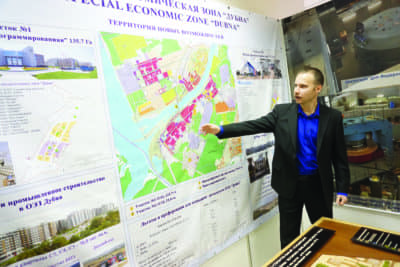
In the end of October 2015 OCA magazine were invited to Russian Federation, Science city Dubna, Moscow Region, organized by Ross Sotrudnichestvo, Mayor of Dubna city and Moscow region governor and  been introduced ….for different aspects of live in Dubna city, such as high technology, Special Economic zone and it’s benefits, Joint Institute for Nuclear Research, Dubna State University and its students and environment, social life, art & crafts, tourism attractions, and of course beautiful nature. This trip changes our perception for business development in Russia, and how attractive it could be. And we want to share our experience, and information about Dubna.


Dubna is science city, dates from the time immediately after the end of World War II on the bank of the Volga river, 120 km from Moscow, where the Moscow canal joins Volga river.

With population 75.2 thousand people, great and unique environment and the atmosphere for a science city was created. Dubna offers favourable ecological condition, pine and birch forests, river and lakes.


From Moscow to Dubna can be reached by car or bus to Dmitrov highway or rail links from Savelovsky Station (train, express train). The nearest international airport “Sheremetyevo” is located 80 km from Dubna. From Moscow to Dubna also binds the waterway – the Moscow Canal.

The city has modern communication systems and telecommunications (telecommunications, cellular communications, space communications, fiber optic data link).

Twin Cities: La Crosse (Wisconsin, USA), Givat Shmuel (Israel), Alushta (Russia) Lincang (Yunnan, China), Goldap (Poland), Kurchatov (Kazakhstan), Nova Dubnica (Slovakia), in formative stage agreement with the city of Nova Gorica (Slovenia).

Modern Dubna is known worldwide as a center for science and high technology. It is the only city in Russia, which is immortalized in Mendeleev’s Periodic Table, one of the scientists synthesized in Dubna elements with atomic number 105 was named ‘Dubnium’.

History and development of Dubna is directly linked to town-forming organizations and enterprises located in the city. Since 1956. the city grew and developed around a 5-core enterprises: Joint Institute for Nuclear Research (year of establishment – 1956.), Dubna Machine-Building Plant (1939.), Engineering Design Bureau “Raduga” (1951.), Instrument Plant ‘tensor’ (1973. ) and the Research Institute ‘Atoll’ (1976.). By the mid 80s the city was formed, known as the Research and Production Center of Russia. Half of the working population of the city at that time, one way or another been associated with science and high technology.

World famous city received in the first place, as an international research center, in connection with activities on its territory, the Joint Institute for Nuclear Research (JINR) – an international intergovernmental research organization, in which assumes constant participation of 18 countries. On the physical facilities of the Institute made a number of discoveries in the field of nuclear physics, new elements are synthesized. JINR Dubna for many years cooperated with the European Organization for Nuclear Research (CERN) in Geneva, with the physical centers of France, Germany, USA, Italy and other countries.

Since 1994, the city became more and university center in connection with the establishment of the educational institutions of the Moscow region – International University of Nature, Society and Man “Dubna”. In 2001 the university granted the status of ‘University of the Governor’ order of the Governor of Moscow region of 26.07.2001g. N-611 NG approved a program of development for 2001-2005.

A distinctive feature of the city of Dubna since its inception (1956) is that it is developed as a cozy fit for maximum creativity, research and engineering the city. The town has a unique experience of international cooperation. Convenient location of the city, highly skilled workers, advanced communications infrastructure and services, the availability of the city branches of the leading banks in Russia, the customs post, the Chamber of Commerce, beautiful natural conditions make the city Dubna attractive for business development.

By the mid-1950s the world had come to realize that nuclear science could not be locked in secret laboratories and that only wide international co-operation could ensure progress in this fundamental realm of human knowledge and peaceful utilization of atomic energy. In 1954 the European Organization for Nuclear Research (CERN) was established near Geneva to unite the efforts of West European countries in studying the fundamental properties of the microcosm.

About the same time, under the stimulus of the USSR Government, the countries then belonging to the socialist world took a decision to establish the Joint Institute for Nuclear Research on the basis of the INP and EFLAN. The agreement on the establishment of the Institute was signed on 26 March 1956 in Moscow. The same year specialists from 12 countries came to Dubna. The town became international. Investigations in many fields of nuclear physics of interest for research centres of the JINR Member States were launched here.

The history of JINR is associated with such outstanding scientists as D.I. Blokhintsev, N.N. Bogoliubov, H. Hulubei (Romania),L. Infeld (Poland), L. Janossy (Hungary), I.V. Kurchatov, H. Niewodniczanski (Poland), A.M. Petrosiants, E.P. Slavsky, I.E. Tamm, A.V. Topchiev, and many others.

What is JINR today? It is a world-known centre for fundamental nuclear research where scientists unite their efforts to gain better insight into the surrounding world. Besides, here the fundamental research is combined with applied investigations and university education.

For more than 15 years, JINR has been participating in the implementation of the programme to establish an innovation belt in Dubna. In 2005, the RF government signed the Resolution “On the establishment of a special economic zone of the technology-innovative type in the territory of Dubna”. The specific character of JINR has been revealed in the SEZ appeal: nuclear physics and information technologies. More than 50 innovative projects have been prepared by the Joint Institute to be implemented in the special economic zone; 9 companies – “Dubna” SEZ residents have their origin at JINR.

JINR today is an internationally recognized centre for fundamental nuclear studies where scientists unite their efforts to gain better insight into the surrounding world. The fundamental studies under way here are combined with applied research and university education in the relevant fields of knowledge.

Technological Innovation Special Economic Zone “Dubna” was established in the territory of Dubna, Moscow region by RF Government Decree #781 of December 21, 2005. Special Economic Zones of Technological Innovation Type are set up for increase of Russian market share in international markets of hi-tech products and machinery development for concentration of intellectual assets and other resources for solutions of priority tasks in S&T sphere in modern conditions and in definite territory.

Areas of activities developed in SEZ Dubna

– Information technologies

-Nuclear physics technologies and nanotechnologies

-Biological and medical technologies

-Composite materials

-Complex engineering systems

Technological Innovation Activity means creation, production and sale of scientific and technical products, creation and implementation of computer programs, data bases, IC topologies, information systems, rendering services for introduction and support of such products, programs, bases, topologies and systems, production of scientific and technical products.

At present at SEZ Dubna has been registered 96 resident-companies, of them 35 companies specialize in information technologies, 35 companies – in nuclear physics (nano) technologies and bio- and medical technologies, 26 companies – in designing complex technological systems. At the same time 35 companies plan own construction, 41 companies – lease of premises. 15 more applications of the companies for the status of resident are under consideration.

Social infrastructure of the Special Economic Zone

For temporary sojourn of invited specialists and highly skilled specialists 2 apartment-type hostels, a polyclinic, multifunctional sports centre have been constructed, reconstruction of access roads has been done at the expense of the RF budget and the local budget. Specialists of the resident companies have an opportunity to acquire housing on mortgage lending terms and conditions. Construction of a school, 2 children’s day care centres, first apartment houses for specialists of the SEZ resident companies in adjoining territory is in process.

Benefits of being a SEZ resident in Russia

SEZ is a large-scale federal project aimed at regional development by drawing direct foreign and Russian investments to the hi-tech economy industries, import-substituting production, manufacturing, shipbuilding and tourism. SEZs are established for the duration of 49 years and allow SEZ residents to retain the right to buy land at a discounted rate after they start production activities.

These zones provide companies with a unique opportunity to use the full range of Russia’s investment opportunities for manufacturing goods that sell for globally competitive prices while avoiding typical concerns related to non-market business pressures and inefficient administration.

SEZ residents enjoy special guarantees by the Government of the Russian Federation for businesses operating in Russia:

  1. Tax preferences: for the SEZ residents income tax rate is set at 0-13.5% instead of 20%; residents of Technology and Innovation and Tourist and Recreational SEZs (which are combined into a cluster) are exempt from income tax; property and transport taxes are lifted for 10-15 years; at the federal level investors are exempt from land tax for 5-10 years.
  2. Modern transport and social, customs and other infrastructure for business development financed by the state.
  3. Special custom regime of free customs area which means that investors operating in the SEZ territory don’t have to pay customs duty and VAT for foreign goods (it is also forbidden to use prohibitions and restrictions of economic character).
  4. Reduced administrative barriers and access to the qualified personnel resources.
  5. Simplified migration regime for highly qualified foreign staff, involved in the special economic zone.

SEZ mechanism is highly appealing for attracting foreign investors, which allows potential investors to use preferential government support. SEZs have the potential to reduce investor expenses up to 30%.


By Aleksandra Vlasova

CATBIG Hosts Central Asian Ambassadors

On 6th July 2015 British Expertise International held a meeting dedicated to the economic, political and commercial situation in the Central Asian countries. The guests of honour at the event were the British Ambassadors to Georgia, Kazakhstan and Turkmenistan.

Alexandra Hall has been British Ambassador to Georgia since September 2013. Alexandra spoke to CATBIG members last May when she gave her initial impressions of Georgia and this time was able to give a mid-posting update as well as compare to her previous postings in Bogota (Deputy Head of Mission) and prior to that in New Delhi, Washington and Bangkok. Dr Carolyn Browne has been British Ambassador to Kazakhstan since January 2013. She has spoken to CATBIG a number of times, and her insights into the politics, economy and commercial opportunities in this key emerging market, a critical player in energy supplies to Europe, are always most sought after. Sanjay Wadvani OBE has been British Ambassador to Turkmenistan since December 2013. CATBIG has worked closely with Sanjay and his team on a range of commercial initiatives, including the Turkmenistan-UK Trade & Industry Council (TUKTIC), and focus events on technical and vocational education and business resulting from Ashgabat holding the Asian Indoor & Martial Arts Games in 2017.

An Unusual British-Iranian Experience

On 30th July 2015, Hertfordshire Press publishing house held an author talk on the book, “Land of Forty Tribes” by British-Iranian author, Dr.Farideh Heyat. The event took place at the Society for Co-operation in Russian and Soviet Studies. Numerous guests attended, including students from SOAS University of London. The author made an interesting presentation of her new book and shared her experiences of travelling in Central Asia, good and bad. Her “Land of Forty Tribes” book was published in 2015 by British publishing house “Hertfordshire Press” and this latest talk is one of a number by the author. The first presentation was held on May in London, while in July another presentation was held in Bishkek, Kyrgyzstan.

 Kazakh Khanate’s 550th Anniversary Celebrations

On 10th June 2015, the Embassy of the Republic of Kazakhstan to the United Kingdom of Great Britain and Northern Ireland and British company, Silk Road Media, held an author talk on the book, “Vanished Khans and Empty Steppes” by English writer, Robert Wight. The event took place at Yunus Emre Institute London Turkish Cultural Centre and was devoted to the 550th Anniversary of the Kazakh Khanate.

The welcome speech was made by the First Secretary of the Embassy of the Republic of Kazakhstan to the United Kingdom of Great Britain and Northern Ireland, Askar Zhiymbayev. Numerous distinguished guests attended, including participants of the first Kazakh delegation from South Kazakhstan (Shymkent), which was visiting Stevenage on the occasion of celebrating the 25th anniversary of the establishment of twin cities status between Shymkent and Stevenage.

The event was also attended by British publisher, Marat Akhmedjanov, who told the audience about the work of his Hertfordshire Press publishing house. The company specialises in publishing books by authors from Kazakhstan and Central Asia. There was also an exhibition of books about Central Asia published by Hertfordshire Press. “Vanished Khans and Empty Steppes” was published by Hertfordshire Press in London in 2014.


Water For Life: Outcomes of the International Water Conference held in Tajikistan

On June 25th the Embassy of the Republic of Tajikistan in London conducted a round table discussion devoted to outcomes of the High-Level International Conference on the implementation of the International Decade for Action “Water for Life”, which was held in Dushanbe from June 9th to 11th.

The round table was attended by the representatives of the Foreign and Commonwealth Office, representatives of the embassies, which are accredited in London, mass media, experts and specialists from leading organisations in the UK which deal with the related theme.

Ambassador of Tajikistan to the United Kingdom H.E. Mr. Erkin Kasymov informed the participants of the main results of the conference, the provisions of the Dushanbe Declaration adopted at the conference, and the proposal of the President of the Republic of Tajikistan on announcing the new international decade for Action “Water for Sustainable Development”. The high level of international participation at the conference was emphasised, which was attended by the official high-level delegations from about 50 countries and international organisations. UN Secretary-General Ban Ki-Moon personally took part in the conference.

In the course of the round table, the Second Secretary of the Embassy Mr. Asliddin Rakhmatov acquainted the participants with the presentation of global water initiatives of Tajikistan. It was noted that Tajikistan is one of the leading centers of “water diplomacy” in the world where in recent years a number of major international events of water related issues were held with the support from the United Nations. In addition to the international initiatives of Tajikistan the participants were also provided with the information on the role of the country in the regional cooperation relating to the preservation of water resources and the environment in the Central Asian region.

Mr. Richard Taylor, the Executive Director of the International Hydropower Association, made a presentation on the impacts of climate change on sustainable development. Mr. Taylor presented an analysis of the impact of climate change on the conservation of water resources required for the electric energy generated by the hydro power plants in the world. Taking into account the huge potential of Tajikistan in hydropower development, the important role of the country in providing the region with clean and cheap energy in future was emphasised.

Upon completion of the presentations the participants of the round table discussion exchanged opinions on the above subjects related to the conference. The participants highly appreciated the Conference organisation. In particular, Craig Fulton, Deputy Head of Eastern Europe & Central Asia Directorate, Foreign and Commonwealth Office who personally participated in the conference, noted with satisfaction the high level preparation and organisation of the conference.

The High-Level International Conference on the implementation of the International Decade for Action «Water for Life», 2005 -2015 was held in Dushanbe in accordance with the General Assembly Resolution and provided an effective platform for comprehensive discussion of the implementation of the main goals of the Decade. The Government of Tajikistan has organised the Conference in close cooperation with the United Nations and other development partners. The Dushanbe Declaration has become an outcome of the Conference, reflecting the key points of the discussions and a number of important conclusions and recommendations. The Conference also supported the new initiative of the President of the Republic of Tajikistan on the announcement of a new International Decade «Water for Sustainable Development». The Government of Tajikistan will submit the Dushanbe Declaration to the UN General Assembly at its 70th session.

Astana Hosts 2015 Charity Marathon

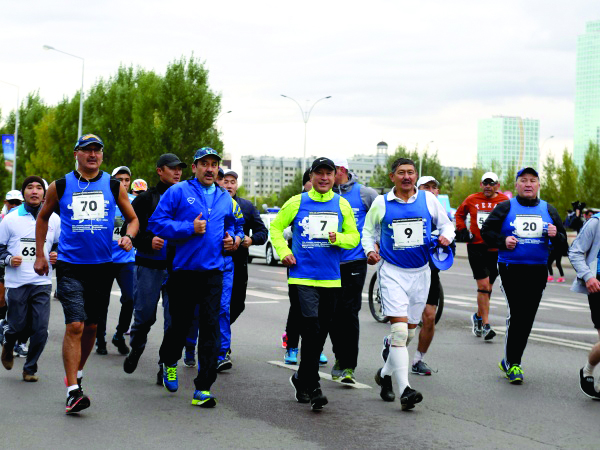
On 13th September 2015, the British Kazakh Society organised a charity marathon in Astana. The event was held with the support of the Rotary club of Astana.

“BKS Air Astana Marathon 2015” was attended by over 500 athletes, more than 100 of which were foreign athletes from 18 countries. Participating in the event were both the Prime Minister of Kazakhstan, Karim Massimov, and the Mayor of Astana, Adilbek Dzhaksybekov, demonstrating the importance of the event.

Participants had to pay for their place to run and all the money collected is to be allocated to projects of the Foundation “AYALA”. The British-Kazakh Society (BKS) has been organising such events for several years in both Almaty and London. This was, however, the first marathon held in Astana. The Marathon consisted of four distances: 5 km and 10 km, 21 km and 97.5 km.

Astronauts Return as Heroes from Orbital Watch

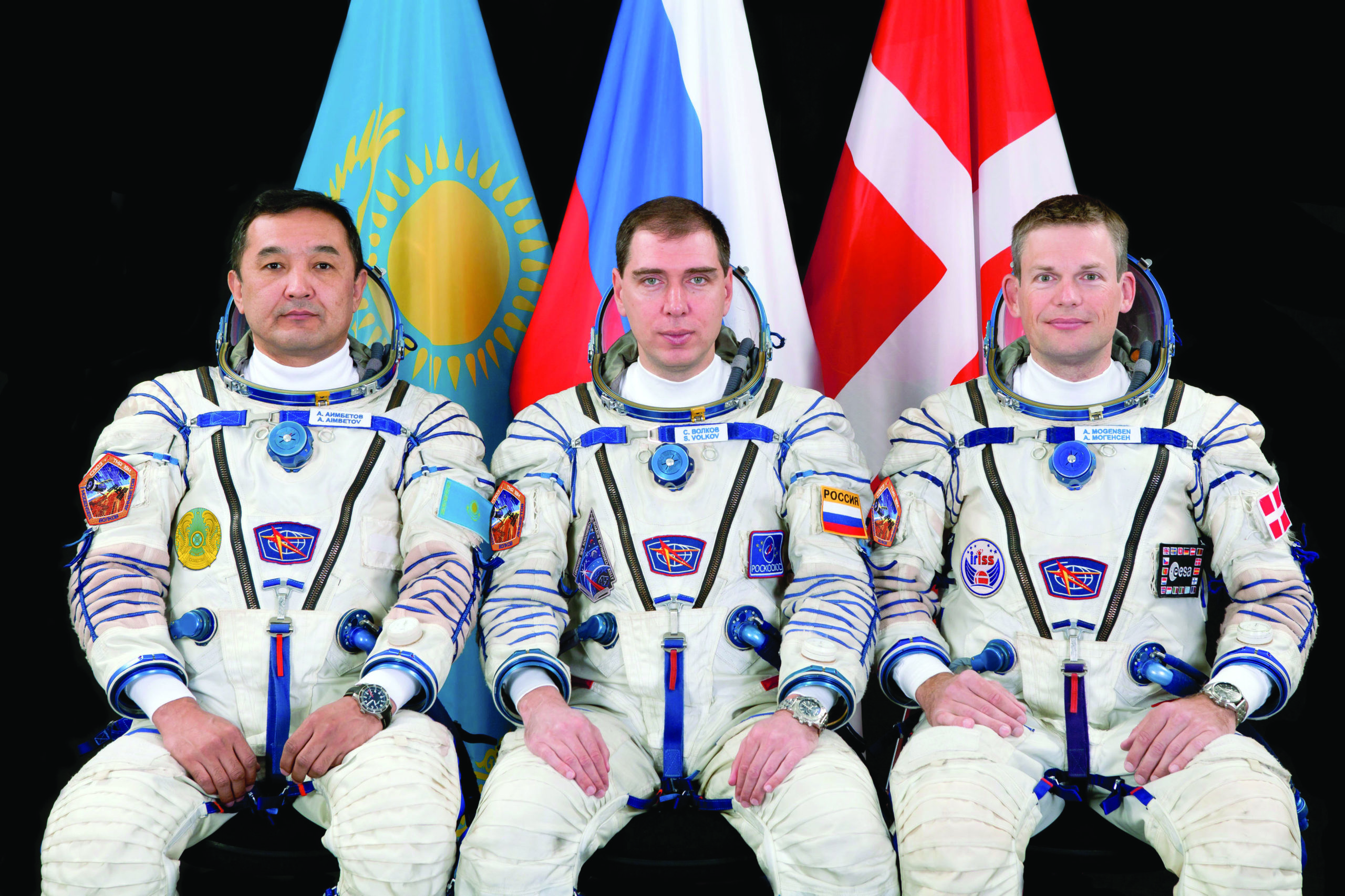
On 12th September 2015, the “Soyuz TMA-16M” capsule landed back in Kazakhstan. There were 3 astronauts on board: a new space record-holder Gennady Padalka (Roscosmos), the first astronaut of independent Kazakhstan Aydin Aimbetova and the first Danish astronaut Andreas Mogensen.


The crew of “Soyuz TMA – 16M” were taken to the Astana International Airport by helicopter, where the President of Kazakhstan, Nursultan Nazarbaev, personally met the astronauts and congratulated them on their successful landing.

The occasion marks a proud moment for the Kazakh people in celebrating their compatriot. The first cosmonaut of independent Kazakhstan, Aydin Aimbetov, went into space on the “Soyuz TMA-18M” spaceship on 2nd September 2015. On 4th of September the “Soyuz” docked with the International Space Station automatically.

Nursultan Nazarbaev noted that despite the large investments in the astronauts flight, he is confident that this will have a positive impact on the development of the space exploration programme.

Fulfilling Kazakhstan’s Expo 2017 Promise

Interview with the First Deputy Minister
of Foreign Affairs of Kazakhstan, Rapil Zhoshybayev


Although for many the thought of the year 2017 is far away in the distance, for Kazakhstan the hosting of Expo 2017 heralds its first major global event that will be held on its territory as a showcase for more than just politicians or businesses. The Expo marks a turning point in Kazakhstan’s nascent history as a state and with the First Deputy Minister of Foreign Affairs, Rapil Zhoshybayev, visiting London to promote the event, OCA caught up with him on progress.

OCA: How are preparations for Expo 2017 going?

R.Z.: So far so good. Presentations have been held in Austria, Germany and London. I just came back from Spain where about 60 leading companies showed the interest and we made presentations for them. There is a large interest in our country. We are gradually getting everything in place to host this exhibition.

OCA: How do you assess the level of interest in this event?

R.Z.: The response is very positive. At the moment we have more extensive work to do; we are engaging business partners and tourism organisations. We are presenting our country to the world. In particular, our scientific and technological centre “Parasat”, is looking for their partners and planning to hold a major international conference on the subject of “Energy for the future and the usage of alternative energy sources” in 2016. The scientists who work in this direction will be able to find their partners. They also will go to Cambridge, to Silicon Valley in California, to Singapore, and other places where scientists are working on the real energy of the future. Under the banner of energy of the future, I mean alternative sources of energy – a source of water, earth, wind, all those sources that can replace our traditional ones.
OCA: You are heavily involved in the promotion of Expo 2017. Many have criticised these exhibitions as being too expensive for the return they provide. How and why do you think Kazakhstan’s hosting of the event will be different and really provide a lasting legacy for the country?

R.Z.: If you look at the development of our country since independence, you will see how progressive it was in terms of international initiatives. At the presentation in London, it was shown how much the republic is ready to host such kind of events, including major sporting events, the OSCE Summit, Astana Economic Forum, the Asian Games; we even competed for holding the Olympic Games. It shows the growth of the Republic.

We expect 85% of visitors from Kazakhstan, the remaining 15% will be not only from neighboring countries but we expect strong interest from the Chinese People’s Republic, the Russian Federation, Central Asian countries, and of course the countries where we are connected by air travel. Recently the president announced his open sky policy. We keep not just national carriers, but all the airlines companies that have interest. For example: Austria, United Kingdom, and we already have opened a direct flight to Paris. I have been to Madrid lately and they are interested as well. It gives us a great economic impact. Today we have a visa-free regime for many countries. This is a big plus for the development of tourism and the investment climate. The same applies to the United Kingdom. Thanks to this initiative, London is the number one city attracting tourists. At the moment, a lot of students want to participate in the exhibition. Elderly people from the country-side write letters, that they want to participate as well. And this is very good. There are certainly skeptics, but every event has them. I think with such interest and a positive attitude to the event, it will be successful.

OCA: Kazakhstan is emerging as a leader among Central Asia in terms of foreign policy. How would you describe the strategy and aims of Kazakhstan in bringing the region more onto the world stage without making your neighbours feel left out?

R.Z.: Our neighbours understand that this kind of exhibition is being held in a post-Soviet country for the first time. When I visited these countries, they showed a great interest, and congratulated Kazakhstan. Turkmenistan, Tajikistan, Azerbaijan, all these countries expressed a desire to participate in our exhibition. Many countries take pavilions of 1000 sq.m. This is the maximum that we provide. As a neighbour we provide support to them. As for international initiatives, we approved the creation of official development assistance; through it we use the financial resources of the European Union, the United Nations and use it for help in tragic situations, or in the field of education and culture. We created this organisation under the Ministry of Foreign Affairs, and it is also helping our neighbours: Tajikistan, Kyrgyzstan etc. This is another step towards rapprochement.

OCA: How do you see the development of bilateral relations between the UK and Kazakhstan growing over the coming years and what are the key objectives of these?

R.Z.: The current relationship with Britain is very positive. This is indicated by the mutual visits of the heads of our countries. The state visit of the British Prime Minister Mr. David Cameron to Kazakhstan in 2013 became a landmark event that activated economic relations between the two countries. During the visit of Prime Minister of Kazakhstan Mr. Karim Massimov to London this February, key bilateral economic institutions – the British Chamber of Commerce in Astana and the Business Council between “Samruk-Kazyna” NWF and the UK Agency for Trade and Investment started their work. We are looking forward to the official visit of President of Kazakhstan Mr. Nursultan Nazarbayev to London this November. This will become President Nazarbayev’s first official visit to a Western country after his re-election and as head of a member state for the World Trade Organisation.

Kazakhstan has always tried to fulfill all the points in the legal economic sector. There was never a big problem. Expo-2017 is a step forward for the development of economic relations between Kazakhstan and the United Kingdom. There is a decision of the Head of State to turn the whole exhibition territory after Expo into an international financial centre, using the example of Dubai’s financial centre. There are English rules and laws. They register 100% of foreign companies, banks, financial institutions. With the implementation of the Dubai centre the economic development rose by 12%. We also want our country to be developed. Here there are certainly great opportunities for Britain’s companies. This special area, with its own law and visa regime, will allow business to be conducted more quickly and efficiently. Kazakhs are a people striving for the best, so I think we can afford it.

Mangilik Festival Takes Kazakhs Back to their Roots

There are the dates in every country, which people love, respect and remember and honour. One such date is the formation of the Kazakh Khanate, which occurred 550 years ago. This event served as a great impetus for the development of Kazakh ethnicity and identity. And, of course, half a century later Kazakhs preserve the memory of it. At the initiative of the President of Kazakhstan, Nursultan Nazarbayev, a festival has been held as a tribute to the Kazakh Khanate.

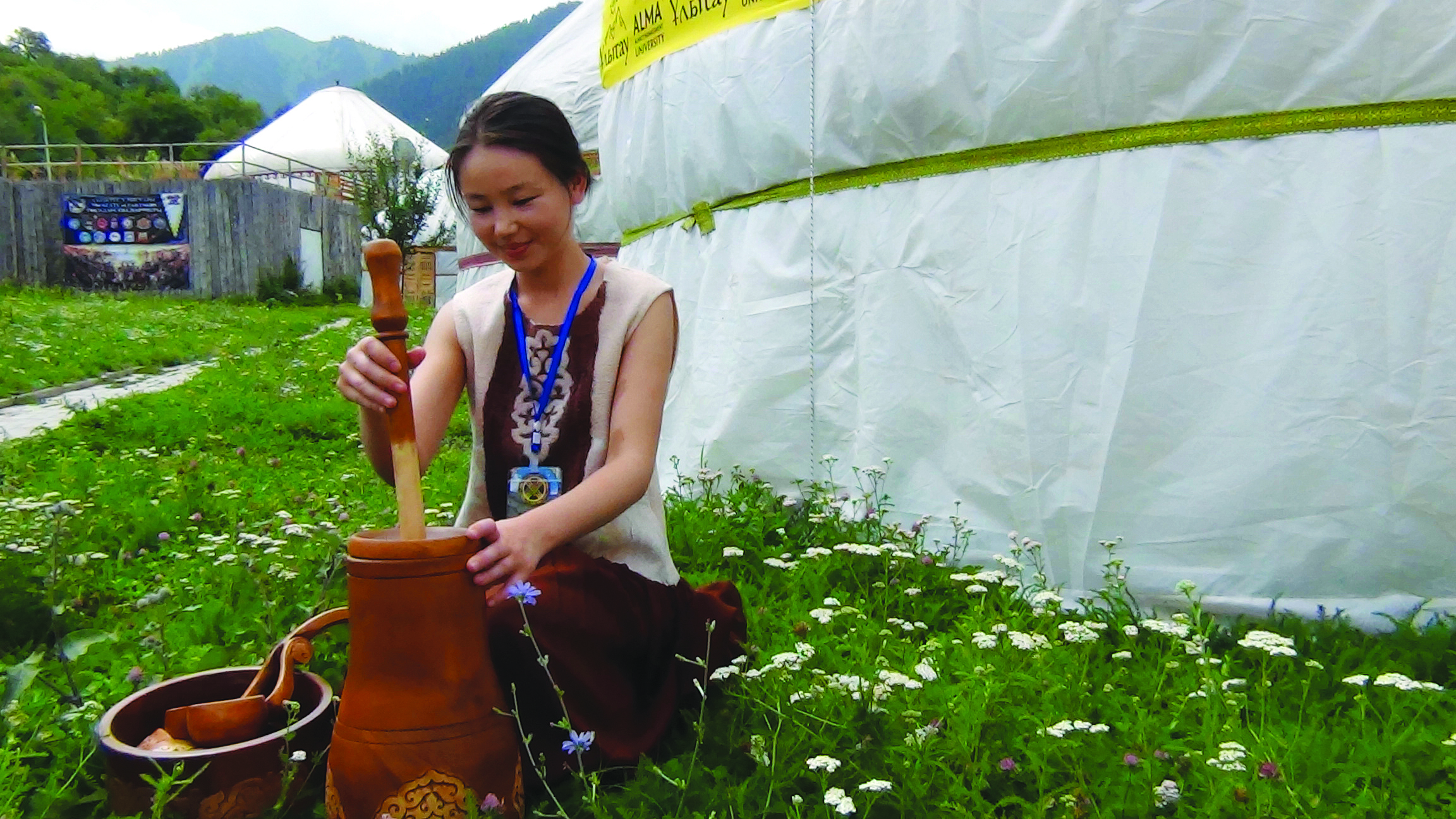
The aims of the festival were the promotion of national cultural traditions and spiritual-moral values of Kazakh people. It invoked interest in ethnic music, national games and the development of patriotism among the Kazakhs. The festival was held outdoors in the mountains, the “Huns”, located a 30-minute drive from Almaty from the 25th to 27th July.

The first day of the festival opened with a parade of participants followed by lunch in a large yurt-like structure with a shanyrak (the upper dome-like portion of a yurt). After lunch participants could learn pottery, pick up Kazakh national instruments: dombra, kobyz, adyrna, jetygen, etc., and even try to speak in the ancient Turkic language. The yurt was decorated inside with amazing handmade carpets (shyrdak), pillows, wolf skins, leather bags, vests, shields and other heritage of the Kazakh people. This part of festival was called “Khan Tengri”.

Visitors were also offered the opportunity to enjoy ethnic music by the “Alan” group, consisting of young Kazakh boys, playing the dombra in both modern and traditional melodies. The festival was not without foreign musicians – the “Kaya” group, who came from the distant Altai mountains played. It is hardly a secret that the Kazakhs, Kyrgyz and Altai have common roots, which explains their cultural similarities in music, cuisine, language and even appearance despite the great distance between these peoples.

After spending the night in a yurt as a very real Kazakh, guests were in a good mood, despite the rainy weather. The exhibition continued with master classes on making felt, jewellery, wood, leather and trying on the Kazakh traditional clothes.

During the festive dinner, guests enjoyed the music of the Great Steppe. Neo-Ethno-Folk group “Arkaiym”, blended traditional instruments and sounds, with modern beats that attracted a wider audience to the origins of these modern performances.

The performance of an extraordinary artist, shaman Hogavat Tobet Kam, is also worth noting with his exhilarating soundscapes, mesmerising imitations of wolf howling and thunder sounds in his performance, which created a mystical atmosphere.

After the musical part all the attention of the audience was transferred to horse-racing games. There were competitions in “Atpen Audyraspak”, “Tenge Ilu”, “Kyz Kuu” and “Kok par” national games. However, the most exciting games were “Kok par” and “Kyz Kuu”.

Kok par” involves two teams. Before the game, a goat carcass is put in a circle, which is drawn in the centre of the arena. The aim is for each team to raise it from the ground and take it into their own net. Needless to say, all of this must be done on horseback. The winner is the team that does this the most times and on this occasion the first placed prize of 150 thousand tenge went to the team from Kazakhstan.

“Kyz Kuu” is another national game, which literally means “catch a girl”. In the first half of the game, a boy pursues a girl, and if he is lucky, he kisses her. In the second half, they change places and the girl seeks to catch up with her partner. If she does this, she beats him with a whip. First place was awarded to a player from the Almaty region, Valikhanova Aidariya.

Around the World in A to Z

Interview with travel writer Paul Wilson


Paul Wilson is an acclaimed traveller and travel writer. Hailing from the less well-known town of Macclesfield in the North of England, his background has always been in history, having studied Ancient and Modern History for many years. From a young age he discovered the joys of independent travel, especially to countries with a rich past. This combination was the driving force that led him to travel writing, although it has sometimes been a slow and difficult journey, as the profession is a much sought after and difficult one to break into. Nonetheless, hot off the back of his first novel, The Alphabet Game, and after having become the heralded knowledge on Silk Road travel (with three Trailblazer Travel Guide editions under his belt), OCA caught up with Paul to find out more.

OCA: You’ve written a guidebook on the silk road, something many people imagine means you just turn up and enjoy the location for a few days before writing a few words about it. How does a typical day look when you are working on such a project in country?

Paul Wilson: The life of a travel writer is usually very different from the popular misconception. It’s hard to get your first break if you want to be a full-time travel writer (rather than someone who does the odd holiday article on the side!), so most people end up doing their initial trips unpaid. I spent eighteen months in the British Library researching my first guide before I even set off. Once you are out on the road it becomes a lot more fun, but every day involves as much ‘fact-finding’ as it does sight-seeing. Writing The Silk Roads I’m usually on the road for three or four months at a time, which I love, but it’s not everybody’s idea of a holiday.

OCA: Why did you choose Central Asia as your area of interest, rather than say Australia where you live?

PW: I’m from the UK and my hometown is Macclesfield, a small town famous for its silk weaving industry. When they built a new road near my house they called it The Silk Road, and I knew straightaway that this was one route I just had to travel along. There are many different strands making up The Silk Road but they all flow through Central Asia, as this region is at the heart of all the ancient trade routes linking East with West, so in many ways Central Asia chose me! Funnily enough, until I moved to Sydney I had never been to Australia.

OCA: What would you say to somebody who said that by writing guidebooks and encouraging visitors, you are promoting the destruction of the unique and unspoilt region of Central Asia that you write about?

PW: I’m glad you asked me this question as it is something I’m quite passionate about. At the moment we are seeing a real and irrevocable ‘destruction of a unique and unspoilt region’ at the hands of ISIS in Syria and Iraq. So for guidebooks and guidebook-writers to be equated to this depresses me. Last year I spent a week in Kazakhstan for the Open Central Asia Literary Festival, and the most important conclusion we all came to is that we need to promote Central Asia, not keep it in the shadows. This involves two key elements: firstly, we need to ensure that the ‘voice’ of Central Asia’s culture (from literature, to art, to tourism) is heard loudly and clearly on the international stage. Secondly, we need to treat the people and places of Central Asia with the respect they deserve, and feature them in credible works on an international stage; not just Borat movies! I hope my books help achieve both these aims in some small way.

OCA: Your new book is a satire on the guidebook theme – what was your motivation in writing it and who will it appeal to?

PW: My plan has always been to be a writer, not just a ‘travel writer’, which means my goal is to write about what interests me, regardless of the format. Alphabet Game is a mix of Around The World in Eighty Days and Evelyn Waugh’s Scoop, with a healthy dose of M*A*S*H thrown in. Hopefully it will appeal to those with as keen a sense of humour as that of adventure, plus anyone interested in the ‘politics’ of Central Asia post 9/11. They say you should write about what you know, so travel and the world of travel-writing forms the backdrop of the story, from the early days of Lonely Planet to our modern desire to race around the world visiting as many countries as we can.

OCA: How far have you got in your own ‘Alphabet Game’ [the counting of countries you have visited starting with each letter of the alphabet] – are you missing any letters that you’d like to visit?

PW: As you have probably worked out there is only one ‘O’, Oman, one ‘Q’, Qatar, and a single ‘Y’, Yemen. The letter you can’t ‘do’ is ‘X’ so Alphabet Game centres the small ‘undiscovered’ kingdom of Xidakistan, wedged into The Pamirs between Afghanistan’s Wakhan Corridor, southern Tajikistan, Pakistan’s Northern Areas and China’s Xinjiang province (East Turkestan). Until Xidakistan is formally recognised we’re still waiting for a ‘winner’! In the meantime I really want to explore Yemen’s Empty Quarter, which would put me on 25 ‘caps’.

OCA: What are your next projects we should look out for?

PW: This year I am lifting the curtain on my first stage play, Shakespeare Tonight, as part of the Sydney Fringe festival. I’m also working on a new novel, Sold Out. But the Silk Road keeps me busy for at least six months of the year and one of my main commitments is to the UNWTO’s Silk Road Programme, working to provide a united voice for tourism in the region. I also do work with Macclesfield Silk Heritage back home.

On a personal level, I thoroughly enjoyed cycling the Silk Road with the guys from Tour D’Afrique, and I hope to get out in the saddle a lot more once my children are a bit older. I would also love to spend some time on a Silk Road archaeological dig at some point, plus climb one of the Silk Road’s highest peaks.

Guidebook-wise, I have been with Trailblazer for over fifteen years now, and have started to edit as well as write their books, which in turn has opened new doors such as being included in Mary Dinan’s Global Suitcase.

ISBN: 978-0-99278773-2-5
Available on Amazon & Amazon Kindle

Bukhara deer of Khangul

Large, dense forests, called galleries, riparian forests, extend along the banks of the big and small rivers in the Central Asia. These woods provide shelter and food for many animals, the largest among them being the Bukhara deer of Khangul.

This Tugai deer is endemic to the region, is a subspecies of the red deer and the closest to the ancestral form. In the 19th Century, it lived in the riparian forests across Amu Darya and Syr Darya rivers, in the reeds to the south of the Aral Sea and in the arid salt desert in the north of Kyzyl Kum.

The Turkic name khangul means “imperial flower”. This is a slim and graceful animal with an average height of about 120cm and weight of about 200 kg. Cresting its body is its unparalleled ornament: a powerful set of antlers with five branches placed directly and symmetrically as a sort of crown. These antlers can be 90-110cm long and weigh a hefty 6kg. Antlers start to grow in the second year of life, and ossify within six months, but without branching. For this reason they are called “hairpins” or “matches”. The annual shedding of antlers and regeneration increases the number of branches. The most beautiful crowns are at 7 to 13 years.
In contrast, the hinds do not have antlers, but their marking is alike. Light brown or sandy-grey with smoky-coloured bodies and dark feet that help camouflage the animal in wood thickets. The back of the hips and the underside of the tail are white; this is called a “mirror”. Bordered with a dark stripe, it serves as a “beacon” for the fawns when moving through woods.

Deer are herbivorous animals; they eat more than 30 kinds of plants which they find in the woods and adjacent deserts. Their ability to swim well and cross even large rivers helps them greatly in their search of food or to escape danger. Long, powerful legs allow these animals to take big strides at an easy pace; and if danger threatens, they can jump two metres high and a distance of about 6 metres.

In the autumn, during the rut, stags organize their own tournaments. The winner, having the right to breed, organizes a kind of “harem” of several hind. Pregnancy lasts 34-35 weeks and the fawn are born, one per hind, at the end of spring and beginning of summer. The weight of the fawn is typically 5-6kg and it height is hardly more than half a metre. They have brown fur with yellow-white patches on the sides and a light stripe on the back to hide them perfectly amongst the undergrowth. The fawn spends the first few days lying down, rising only when its mother approaches to suckle it. They grow fast and in a week they follow their mother and a month later they try to eat on their own.

The main enemy of the Bukhara deer till the middle of the last century was the Turan tiger but nowadays it is wolves and feral dogs. The deer is listed in the Red Book of Central Asian countries, but the main causes by which the deer became “rare” and exist “on the verge of extinction” are habitat destruction and hunting by man.

text by Yuriy Chikin,
Candidate of Science in Biology

Adventures of Khorezm Puppets in Edinburgh.

On the 12th of August, on a grey London Wednesday morning we met at King’s Cross station, rushing to get to our seats on time. I was going with a theatre group to film their puppet show from Khorezm at the Edinburgh Fringe Festival as part of my documentary about the Central Asian Theatre Group – Orzu Arts.

It was surreal to see these people from the ancient land of Khiva sitting next to me in the train to Edinburgh, speaking in Uzbek, exchanging jokes and taking endless pictures on their phones. I was filming them in the train, trying to make links between past and present. Khiva, a city on the Great Silk Road, is the motherland of the famous dance, Lazgi, and also the origin of puppetry arts in Central Asia. Puppetry is one of the oldest performing art forms in Uzbekistan. Puppet performances have been mentioned in the history records of Central Asia from the first century A.D. and were always hugely popular among the people. For a long time the markets of the Central Asian cities hosted shows by puppet masters. Puppet shows of the past were known to be subversive as they parodied the ruling classes and brought forth the issues and wounds of society in a humorous form. Till today, many artists and craftsmen of Uzbekistan have preserved the art of making beautiful, traditional puppets with intricately embroidered national clothes.  The heads of puppets are made out of papier-mâché and are painted in oil, and the clothes are hand stitched from local materials, such as vibrant atlas cloth.

These puppeteers and their wives have been crafting puppets for the past 20 years. They were self-taught and now they are travelling the world, sharing their stories. I tried to picture dedicating my entire life to one vocation and mastering it to perfection. That must take real dedication and passion, not the kind of passion kids on social media exhibit by posting endlessly about their favourite topic at that moment, but a different kind of passion, a real commitment, the kind that swallows you whole, day after day, year after year.

As soon as we arrived in Edinburgh we were swept off our feet by the kaleidoscope of bright colors, characters and sounds. The streets were buzzing with life and excitement. The theatre group changed into their costumes and we distributed leaflets, screaming out joyfully “Puppet show!, as some of our forefathers must have done over the centuries. There was nothing in the world more important than puppets and it was all for them. I felt as though they were alive and had minds and identities and it was the puppets who had come to visit the city.

The next day it was show time. I met the group early at 8 am for the rehearsal. During the rehearsal the director was working together with technicians to coordinate and synchronise sound and lighting. As a filmmaker, I am used to the idea that sound design will come in post-production and the only thing I have to do is monitor the sound levels while recording. Being in a theater made me realise the anxiety and intensity of having to do everything live. It had to be perfect and everyone had to be on the same page.

The performances took place at Surgeons Hall on Nicholson Street later that evening. The puppets were a major success with the children. Yuldosh, the Founder and Director of Orzu Arts, had to be the puppets’ personal translator, because the puppets did not speak English and he had to explain what they were up to:

“It’s the wedding anniversary of an old man and old woman and beautiful puppet dancers have come to perform Lazgi. The Lazgi dance originates from a folktale; there lived a king and he had 41 children and the youngest one of all, was the prettiest and his favourite. And that’s why the other wives got very jealous and threw the youngest one off a cliff. That day she was supposed to dance for her king and although she had her bones broken, the strong woman insisted that she still would dance for her king. And this is how Lazgi, the broken dance, was performed for the first time.”

Although the tale is sad, the performances were fun. Yuldosh was making jokes and the puppets were dancing and jumping around. I was surprised to realise that even within the limits of strict coordination and a tight time schedule, the whole group managed to improvise. The show was highly interactive, children were invited on stage to participate and they all loved making chit chat with Yuldosh throughout the show.

When I found out about the existence of Orzu Arts and their performance at the festival, I took it as an opportunity to continue exploring my main interest, Central Asian art, through the medium of documentary film. As Umberto Eco wrote: “to survive we must tell stories”.  I think that stories have the power to transcend cultural boundaries and create a deeper, mutual understanding. The film will screen in December 2015.

More excitingly, perhaps, the puppets and their show are coming to London in November for the Open Central Asia Book Forum and Literature Festival organised by Hertfordshire Press. So don’t miss out!


Text by Malika Suleymanova


Afghan Cultural Festival Invades London

On a crisp, sunny Sunday morning in the middle of a pleasant British summer, Afghan Association Paiwand opened the gates of its first ever independently-run Afghan Cultural Festival to scores of queuing families, anxious to get into Allianz Park before midday to witness the official opening of the Festival. Eight hours of musical performances, family activities and athletics demonstrations began with speeches from the Mayor of Barnet, a spokesperson from Stop the War Coalition and Afghan Association Paiwand’s Chairman, who welcomed the public to enjoy the array of activities available at this year’s event.

The Festival was the first of its kind in London: an inclusive event that succeeded in bringing together singers, actors, classical musicians, fine artists and photographers of different Afghan backgrounds to showcase their work – both amateur and professional, local and international – to 5,000 members of the UK’s Afghan community.

Upon entering the Park, visitors were met with a dizzying variety of Afghan and Central Asian food stalls scrawled across the Piazza, and were wooed by enthusiastic restauranteurs into deciding which dish to consume, many of which reminded the elder attendees of their childhood meals taken with families back home in Afghanistan. After feeding the family, guests were invited to wander through the indoor portion of the Festival, a massive hall which housed nineteen charity and commercial information stalls, a children’s storytelling and performance stage and a traditional Ghazal stage, complete with a rich afternoon of performances by renowned classical musicians, including Professor John Bailey and Veronica Doubleday, Milad Yusufi, Khair Muhammad Chavosh, Karim Haqdad, Clem Alford and Sirish Manji.

Across from the stage, three fine artists displayed and sold their works in an elegant exhibition space. Afghan illustrator, Sadaf Ahmadi and Afghan painter, Mr. Hadid, showcased their pieces alongside Iranian photographer, Shahriar Khonsari, whose work depicts the plight of Afghan refugees in Iran.

Meanwhile, throughout the rest of the park, children flew kites, played on fun fair rides and circus equipment, had their faces painted and watched falconry displays, while 350 Afghan footballers played an all-day, seven-a-side tournament.

As performances on the main stage progressed, the crowd on the pitch grew into a massive sea of dancing, eating and celebrating audience members. Three well-known presenters led the crowd through children’s choir and theatre performances, and a number of opening acts, including Uzbek singer Khair Muhammad Chavosh, Scottish-born Clem Alford, Bahir Amiri, Arash Barez, London-based Elaha Sroor, Tawab Arash, rapper Bejan Zafarmel and Bashir Maidani. Finally, the beautiful Mozhdah Jamalzadeh, a Canadian-Afghan singer and activist waltzed onto the stage in a striking yellow dress before a cheering crowd of young girls and long-time fans, performing a number of her well-known favourites. As the sun began to set, headliner Sediq Shabab appeared onstage to close the festival with an hour-long performance of his best hits.

The cheery faces of children and adults alike beamed throughout the day as they enjoyed what was on offer at the event. One Festival-goer from the community said, ‘The venue, the music, the food, the stalls, the security and overall the environment was very enjoyable. Thank you to the hard-working and responsible volunteers who did a great job. It was the first time that my children told me they had enjoyed an Afghan event in 20 years.’

Astana Hosts the Fifth Summit of the Turkic Council

On 11th September 2015 Astana hosted the Fifth Summit of the Turkic Council. This was the second summit held in Kazakhstan and the fifth anniversary of the Summit.

The Summit of the Turkic Council is a unique event that brings together countries with a long history, which have common Turkic roots. The main purpose of the event is the development of comprehensive cooperation between Member States. The Cooperation Council of Turkic Speaking States was established with the signing of the Nakhchivan Agreement of 3rd October 2009, and the first summit was held on 20th – 21st October 2011 in Almaty.

The Fifth Summit was attended by the heads of states Ilham Aliyev (Azerbaijan), Almazbek Atambayev (Kyrgyzstan) and by the head of the Grand National Assembly of Turkey, Ismet Yilmaz. The Deputy Prime Minister of Turkmenistan Sapardurdy Toylyev also participated as a guest host.

The summit was also attended by the General Secretaries of the Turkic Council, TURKPA, TURKSOY and by the presidents of the International Turkic Academy and the Foundation of Turkic culture and heritage.

During the summit, chairmanship was handed over from Turkey to Kazakhstan.

The heads of member states have approved the report of the Secretary-General of the Turkic Council about its activity in the past year. There was also an agreement signed for the emplacement of the Deputy Secretary General of Turkic Council and President of the Turkish culture and heritage.

The heads of delegations have resumed the activities of the past period and set up perspectives and ways of future development for further strengthening cooperation in economic, cultural, educational, scientific, touristic and information fields. Much attention was paid to the issue of further institutional strengthening of the Turkic world and its role in regional and international security.

The conference, devoted to the 550th anniversary of the Kazakh Khanate, was held as a part of the Summit of the Turkic Council. The conference was opened by the President of the Republic of Kazakhstan, Nursultan Nazarbayev, in attendance of the Heads of States of the Turkic Council. The opening ceremony was held at the Ak Orda Presidential Palace, where Nursultan Nazarbaev made the welcome speech.

The President of Kazakhstan Nursultan Nazarbaev called the Fifth Summit of the Turkic Council “an important step towards the integration of the Turkic world”. The Head of State stressed the need to accelerate the adoption of the concept of integration of the Turkic world as proposed by the Turkic Academy.

The President of Kazakhstan noted that obtaining future observer status at the UN and OIC by the Turkic Council will greatly help to meet the common interests of member states.

The participants of the summit came to a decision that the Sixth Summit of the Cooperation Council of Turkic-speaking states will be held in 2016 in Cholpon-Ata (Kyrgyzstan) and will be devoted to the subject of “National Sport”.

WHY YOU SHOULD TRAVEL TO KAZAKHSTAN

OCA #21  SPRING 2015  WWW.OCAMAGAZINE.COM Text by Andrew Glenister

Before visiting Kazakhstan, the country had never really been on my radar. I knew where it was, and a little of its history, but I had never considered it as a holiday destination. I definitely do now. And I would recommend that anyone with an interest in a more adventurous type of holiday consider it too.

Though my time there was short, eight days in all, it was big on experiences. Bearing in mind my adventure was primarily limited to southern Kazakhstan and the Caspian coast, here, in no particular order, are my top five reasons to visit Kazakhstan.

CHARYN CANYON
Charyn Canyon is a few hours east of Kazakhstan’s largest city, Almaty, and can easily be visited on a day trip. Part of the Charyn National Park, it was easily the most ‘touristy’ part of my adventure, with signposts guiding you down to the base of the canyon. Do not let this deter you though, as the surroundings are magnificent. In the layering of the canyon walls you can see how this land was built over tens of thousands of years, and in the fast flowing Charyn River at the bottom how it was all carved away.

THE MAUSOLEUM OF KHOJA AHMED YASSAWI
Kazakhstan has four UNESCO World Heritage Sites. One of them is the Mausoleum of Khoja Ahmed Yassawi in the city of Turkestan. It is one of the most impressive buildings I have ever had the pleasure of visiting, easily the equal of more famous religious landmarks such as St Pauls Cathedral in London or the Sagrada Familia in Barcelona, despite the fact that it remains incomplete more than 500 years after building began.

BAIKONUR COSMODROME
When most people think of watching rocket launches they think of the Kennedy Space Centre; it is, after all, where the first men on the moon launched from aboard Apollo 11. But it is worth remembering that the first man-made object in space, the first man in space, and the first woman in space all departed from Baikonur Cosmodrome. That alone makes it worth a visit. But if you want to see something truly special, and make your friends jealous in the process, try visiting during one of the regular rocket launches.
A Soyuz rocket ready for take-off

THE RUINS OF SAURAN
Sauran. Not Sauron. There be no Hobbits here. But there are extraordinary panoramic views of the Kazakh steppe. An old fortress city of the Silk Route, it is now a collection of partially excavated walls offering a fantastic, tourist-free, view of the how the eastern and western worlds traded and communicated nearly a millennia ago.

THE AK-MECHET CAVE
A hidden treasure. Those three words best sum up this otherworldly cave. It is so hidden that, at last check, two of the top four search results on Google are my blog. It is probably for the best that it remains hidden, lest the calm, tranquil, and spiritual feeling be spoilt. From the dripping of water from the roof of the cave, to the assortment of birds and bats twittering, and the extreme calm that comes from being out of winds way, Ak-Mechet Cave is an experience like no other.

ADOPTING THE KAZAKH WAY OF LIFE

OCA #21  SPRING 2015  WWW.OCAMAGAZINE.COM

Different people are drawn to Central Asia for different reasons. Indeed many come by accident, knowing little of what awaits them or how life changing it could be.

Once such person is Gareth Stamp who came to Kazakhstan five years ago for what he describes as his ‘daily adventure’.

‘I remember seeing a small advertisement in a newspaper in Great Britain asking for teachers to come to Kazakhstan and help develop the education system. So I applied and was successful, but I have to admit that I did not even know where Kazakhstan was or what would greet me. I now feel very ashamed that this wonderful country and its amazing people were not even on my geographical radar.’
Five years later, Gareth has become a well-known figure in Astana, networking and sharing his experiences with the quickly expanding international community. He is the president of the newly formed Rotary Club of Astana. Rotary is an international organisation with over two million members worldwide. It is the largest NGO and brings likeminded people together to do humanitarian projects, both in their local community and internationally. In Astana they are already fundraising for a number of projects involving disabled children, orphanages and other disadvantaged groups. The Astana club has grown quickly, having twenty five members from different professions and backgrounds.

‘Rotary has become a big part of my life and I am very proud to have been elected as the first president in Astana. Although we are not the first club in Kazakhstan we are the biggest already and aim to carry on the good name of Rotary here in Central Asia. It is not just about the projects it is also about the fellowship and it has become a great social gathering too. Real friendships are made and we have a common goal to keep us together like a family’

Gareth’s original role at the Nazarbayev Intellectual Schools involved helping to write the new curriculum for Kazakhstan, train teachers and develop a new education model for the country. He has since moved to Haileybury Astana, the British School, as their Director of External communications, using his contacts and management skills to help market a fast growing educational institution.

‘Kazakhstan and Astana in particular is now my home. I love the people and opportunities that are here. Every day is an adventure.’

‘One of the biggest issues here is the scale of the country. There is so much to see but travel takes longer than you would expect. Rather than get on a plane I allow a little extra time and take a train. It is amazing the new friends that you meet stories you share and barriers that you break down. My Russian and Kazakh are limited but once people find out there is a foreigner on the train communication happens. I often wondered how ancient explorers like Marco polo broke down the language barriers and now I know. People are naturally curious and Kazakh’s are naturally generous. This linked to a pride in their country and culture makes me richer with every journey I take.’

Gareth records most of his experiences through his photography, drawings and in a diary, sharing his new life with his friends in the west through social media. He has also had exhibitions of his work in Astana. He has become part of the growing Art and Design scene in the capital and was recently presented with an award for services for the development of design in Kazakhstan.
The world for Gareth is very different but his story is not unique. As Kazakhstan develops its International status so more travellers come to see it for themselves, to do business and increasingly as tourists. With future events, such as Expo 2017, the country is revealing more of its natural and manmade attractions that put Kazakhstan on the map.